
When you search for burning pictures of your ex, you’re looking for more than destruction. You’re exploring one of humanity’s oldest symbols of change and release.
The impulse to destroy physical reminders of past relationships is deeply human. These photos can feel heavy with old emotions and memories long after the relationship ends. Burning them isn’t just destruction – it’s a deliberate act that cultures worldwide have used for centuries to mark endings and new beginnings.
Key Takeaways
- Burning photos represents letting go from emotional attachments that no longer serve you
- The act symbolizes reclaiming personal power by taking active control over your healing process
- Fire represents purification and the destruction of what weighs you down
- Your intention behind the act matters most – healing versus revenge creates entirely different outcomes
- This is about your own healing, not about affecting the other person
- Cultural traditions worldwide use fire as a tool for cleansing and new beginnings
🛍️ See our favorite picks on Amazon: Best Crystals For Pisces
The Symbolism of Fire in Spiritual Practice
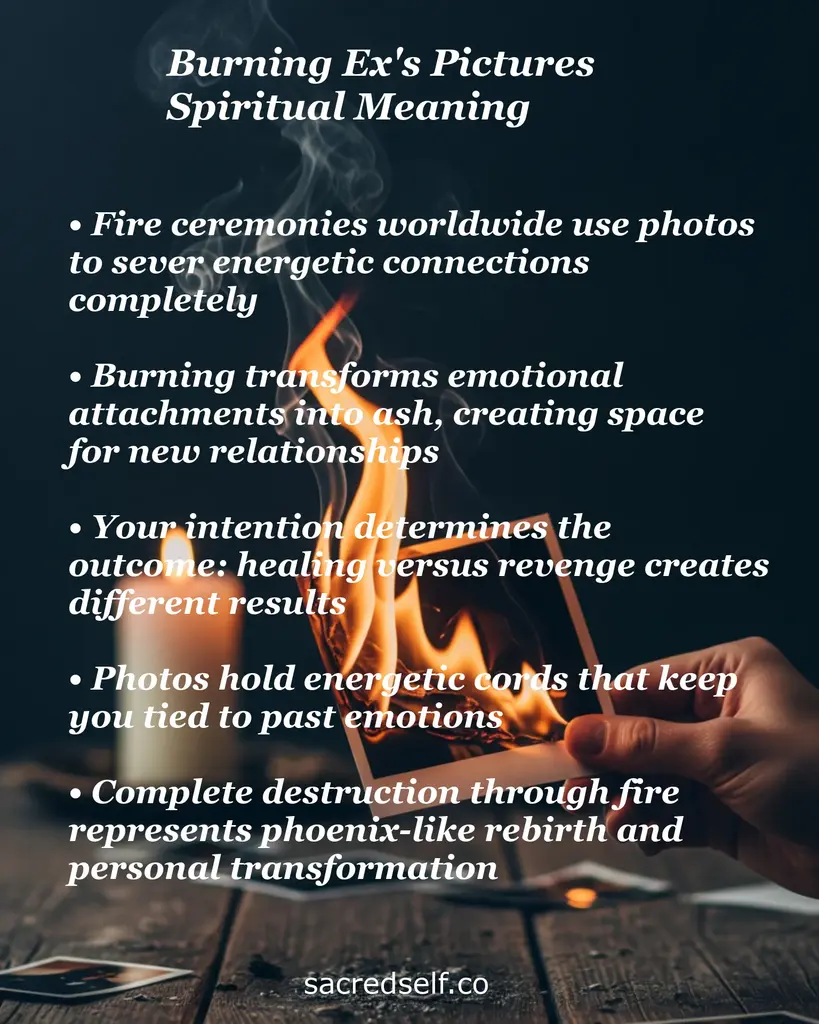
Fire appears in sacred practices across cultures. From Hindu fire ceremonies to Christian references to purification, fire represents the death of the old and birth of the new.
Burning differs fundamentally from other forms of letting go. When you throw something away, it still exists somewhere. When you burn it, you change its very essence into smoke and ash – a complete metamorphosis.
The phoenix mythology captures this perfectly. The mythical bird doesn’t simply die and get replaced – it burns completely and rises renewed from its own ashes. Your photos become the old self that needs to burn away.
Fire as purification versus fire as anger creates entirely different outcomes. When you burn photos from a place of healing and release, you’re using fire’s power to help you move forward. When you burn them in rage or revenge, you’re feeding destructive emotions.
🦋 You might also find this valuable: Spiritual Meaning When Everything Goes Wrong
What Burning Photos of Your Ex Represents Spiritually
The act of burning photos operates on multiple levels of meaning, each addressing different aspects of your healing journey.
Energetic Cord Cutting and Release
Many traditions believe that photos hold energetic connections to the people in them. Every time you look at that picture, you’re reinforcing an invisible cord that keeps you tied to past emotions and experiences.
Burning the photo symbolically severs these attachments. You’re not just destroying paper and ink – you’re cutting the threads that keep pulling you backward.
Practical reflection: What emotional ties are you ready to release? Notice which photos feel heaviest when you hold them. These often represent the deepest connections that need cutting.
Reclaiming Personal Power
Burning your ex’s photos represents taking active control over your healing process. Instead of waiting for time to heal all wounds, you’re choosing to participate in your own recovery.
This shifts you from victim mindset to empowered action. You’re no longer someone things happen to – you’re someone who makes things happen for your own wellbeing.
Practical steps: What aspects of yourself do you want to reclaim? Make a list before you burn. Write down the parts of your personality, dreams, or habits that got lost in that relationship.
Symbolic Death and Rebirth
Burning photos represents the death of who you were in that relationship and the birth of who you’re becoming. Every relationship changes us, and some changes need to be consciously released.
This isn’t about erasing good memories or pretending the relationship never mattered. It’s about letting the version of yourself that needed that relationship change into someone who no longer does.
Reflection questions: What version of yourself died in that relationship? Who are you becoming now? What dreams can you resurrect that got buried?
Purification and Cleansing
Fire purifies by burning away what doesn’t serve while leaving what’s essential. Burning photos helps clear negative emotions like resentment, obsession, or false hope that keep you stuck in the past.
This creates space for new experiences and relationships. When you’re no longer carrying the emotional weight of old photos, you have more energy for present-moment connections.
Practical approach: What emotions are you ready to let go? Before burning, acknowledge each difficult feeling – then consciously choose to release it into the flames.
Cultural and Spiritual Perspectives on Burning Photos
Ancient Fire Rituals for Release
Hindu traditions use Agni (fire ceremonies) to mark change. Fire is seen as a messenger between the physical and spiritual worlds, carrying prayers and releases upward as smoke.
Native American traditions include burning rituals for letting go of what no longer serves. Different tribes have specific ceremonies for releasing grief, anger, or attachments that prevent growth.
These ancient practices recognize that some things can only be released through complete change – not just mental acceptance but physical, ceremonial action.
Christian Perspectives on Burning Objects
Biblical references present fire as purification rather than destruction. 1 Corinthians 3:13 speaks of fire testing what is built in our lives, burning away what won’t last.
The concept involves burning what doesn’t serve God’s purpose in your life – including attachments that prevent growth and healthy relationships.
This perspective balances symbolism with healthy emotional processing. The goal isn’t revenge but purification of your own heart and intentions.
🦋 This might also resonate with you: Spiritual Meaning Of Everything Breaking
When and Why People Feel Called to Burn Photos
After discovering betrayal or lies, burning photos helps process the shock and anger while symbolically destroying false memories and illusions.
During major life transitions – moving, career changes, or awakenings – old relationship photos can feel energetically incompatible with your new direction.
When physical reminders feel heavy, you might notice certain photos drain your energy or trigger unwanted emotions every time you see them.
As part of intentional healing work, burning becomes a ceremony marking your commitment to emotional freedom and personal growth.
Signs your heart might be ready: You can look at the photos without intense pain, you’re more curious about change than focused on the past, and you feel strong enough to handle whatever emotions arise.
What to Reflect On Before and After
Examining Your Intentions
Are you acting from anger or from a desire to heal? Anger wants to hurt or punish. Healing wants to release and move forward. The same physical action creates entirely different outcomes.
What outcome are you hoping for emotionally? Be honest about whether you want closure, revenge, attention from your ex, or genuine personal freedom.
Questions to ask yourself: Am I ready to release this person completely? Do I want them to somehow know I’m burning their photo? Am I doing this for me or to send them a message?
Creating Meaningful Ritual vs. Impulsive Destruction
Sacred ritual involves preparation, intention, and ceremony. You create a specific time and space, set clear intentions, and treat the act with reverence.
Reactive behavior happens in emotional storms without preparation or clear intention. The same action – burning photos – becomes either healing or just another way to stay stuck in drama.
Setting intentions and creating ceremony: Choose a meaningful location, prepare your space, write down your intentions, and approach the burning with respect for the change you’re creating.
Alternative approaches if burning doesn’t feel right: Burying photos, dissolving them in water, or creating art that changes them into something new.
Processing What Comes Up
Emotional responses that might arise include unexpected grief for the relationship, relief at finally letting go, anger at time wasted, or fear about moving forward alone.
How to handle unexpected emotions: Don’t judge whatever comes up. Burning photos often releases emotions you didn’t know you were carrying. Let yourself feel without trying to fix or change anything immediately.
When to seek additional support: If burning photos triggers overwhelming emotions, thoughts of self-harm, or inability to function normally, reach out to a counselor or trusted friend.
🦋 Continue your journey with: What Does Smoking Do Spiritually
Practical Steps for a Meaningful Release Ritual
- Prepare your space mindfully – choose somewhere private and meaningful, gather supplies safely, and create uninterrupted time
- Safety first – use a fireproof container, have water nearby, burn outdoors or in a fireplace, and never leave fire unattended
- Set clear intentions – write down what you’re releasing and what you’re calling in, read your intentions aloud before burning
- Create ceremony – light candles, play meaningful music, or say prayers that feel authentic to you
- Alternative symbolic actions – if burning isn’t possible, try dissolving photos in water, burying them, or changing them into art
- Handle the ashes mindfully – scatter them in nature, bury them, or keep small amounts in a special container as a reminder of your change
- Journal afterward – write about what you felt during the process and what you hope changes moving forward
Frequently Asked Questions
Is burning photos bad luck?
Superstitions about burning photos vary across cultures, but your intention matters far more than superstition. If you approach burning as a healing ritual rather than an act of hatred, most traditions would see it as positive change.
Focus on your motivation rather than cultural fears. Personal practice often transcends general superstitions when your heart is genuinely seeking healing.
What is the meaning of burning photos?
Burning photos represents change, release, and conscious choice. Throughout history, people have burned objects to mark endings, release attachments, and create space for new beginnings.
What matters is what burning means to you. Your individual practice creates its own meaning.
Is it bad karma to burn pictures of someone I once loved?
Karma relates to intention more than action. Burning photos from love – wanting the best for both of you – creates different karma than burning them from hatred or revenge.
The difference between destruction from love versus hatred shapes the outcome. Love-based release says “I free us both.” Hatred-based destruction says “I want to hurt you.”
Focus on your healing rather than affecting them. When your intention centers on your own growth, karma tends to support that.
What should I do if I feel guilty after burning the photos?
Guilt after symbolic acts is completely normal. Part of you might feel like you destroyed something precious or made a mistake you can’t undo.
Process guilt without judgment. Ask yourself: Am I guilty about the act itself, or about finally letting go? Sometimes guilt masks fear of actually moving on.
Moving forward after the ritual: Remember that you can honor good memories without keeping physical reminders. The relationship’s value doesn’t depend on keeping photos.
Can I burn photos of people other than an ex, like a former friend?
The same principles apply to any relationship that ended painfully or left you carrying heavy emotions. Burning photos represents release regardless of relationship type.
Consider appropriateness carefully. Some friendships might heal with time and communication. Others might be toxic situations that benefit from complete release.
Alternative approaches: Sometimes writing a letter you never send or creating art about the relationship serves better than burning photos.
Does the person in the photo feel it when I burn their image?
The burning affects your healing, not theirs. The primary impact happens within your own energy and healing process.
Scientific versus other perspectives vary widely. Some believe in psychic connections, others see it as purely symbolic for the person doing the burning.
Focus on your own journey rather than external effects. Whether or not they “feel” anything, your healing and release matter most.
What happens when you burn someone’s picture spiritually?
Various traditions offer different beliefs about effects, from cord-cutting to karmic release to simple symbolic change.
Personal change happens regardless of metaphysical beliefs. The act of burning represents your commitment to growth.
The importance of focusing on your own journey cannot be overstated. Your practice serves your healing, not external manipulation.
Should I keep one photo just in case I want to look back later?
“Just in case” thinking often indicates unfinished letting go. If you’re truly ready to release the relationship, keeping backup photos contradicts that intention.
Working through attachment means accepting permanent change. Growth sometimes requires burning bridges to old patterns completely.
Alternative ways to honor positive memories: Write about good times, create art inspired by lessons learned, or keep small mementos that don’t trigger heavy emotions.
Moving Forward After the Ritual
Expect emotional shifts in the days and weeks following. Some people feel immediate relief, others experience delayed grief, and many notice subtle changes in how they think about the past.
Signs the ritual served its purpose include feeling lighter when thinking about your ex, having more energy for present relationships, and noticing less compulsive thinking about what went wrong.
Create new rituals for your future self. Consider daily practices that reinforce your new direction – meditation, journaling, or activities that represent who you’re becoming.
When burning photos is just the beginning of deeper work, embrace it. Sometimes symbolic acts open doors to therapy, practice, or healing work you didn’t know you needed.
Build a vision for the life you want to create. Use the space cleared by burning old photos to imagine new relationships, experiences, and versions of yourself.
How do you feel about burning photos now? What space has been created for something new? Trust your own timing and process – you know better than anyone what your heart needs to heal.
Have you ever burned photos or other reminders of a past relationship? What did that experience teach you about letting go? Share your story in the comments – your journey could light the way for someone else walking a similar path.
Namaste. 🙏
🦋 Continue your journey with: Spiritual Meaning Of The Name Michael