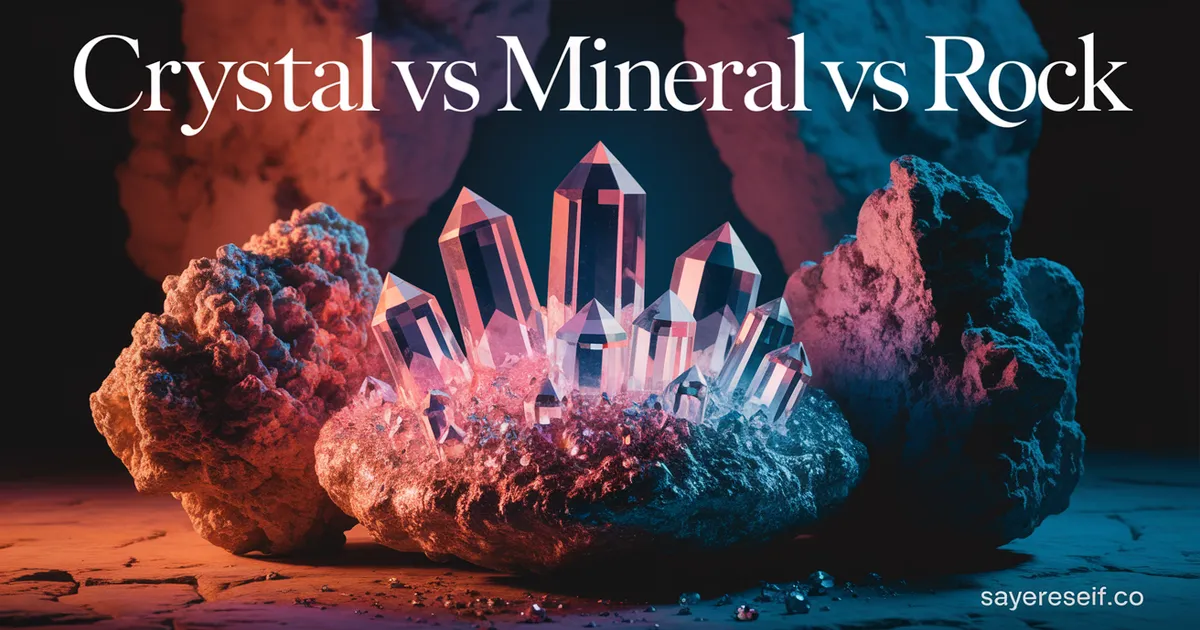
People use the words crystal, mineral, and rock like they mean the same thing, especially in crystal shops and everyday conversation. A mineral is one substance, a crystal has ordered structure, a rock blends minerals.
Once you know the difference, you can sort what you find outdoors or buy at a shop into the right category. You’ll also understand what sellers actually mean when they use the word ‘crystal’ on a label.
Key Takeaways
- All crystals are minerals, but not all minerals are crystals. The crystal structure is what sets them apart.
- A rock is made of more than one mineral, so a rock is never a single mineral or a crystal on its own.
- Gemstones in jewelry can be minerals, crystals, or composite rocks depending on what they are made of.
- The word crystal in a shop usually means a faceted mineral, not a strict scientific term.
- Knowing the category helps you assess quality and spot mislabeled pieces.
💫 Check current prices on Amazon: Best Spiritual Wall Decor For Bedroom
What Is a Crystal?
A crystal is a solid whose atoms repeat in a regular, geometric pattern. That repeating pattern is what produces the flat faces and sharp edges you can see or feel on a piece of quartz or amethyst. Selenite is another common example you might have encountered.
In spiritual practice, people choose crystals for their consistent structure and distinctive appearance. If you’ve got a clear quartz point sitting on your shelf, that regular shape comes from the atomic pattern inside it.
What Is a Mineral?
A mineral is a naturally occurring, inorganic solid with a defined chemical makeup. It has a specific composition throughout, meaning it’s the same substance from one side to the other. Every crystal qualifies as a mineral, but some minerals form without a clear geometric shape.
People work with minerals as raw specimens and as polished stones in spiritual and decorative contexts. A tumbled piece of hematite on your desk is still a mineral even without visible crystal faces.
What Is a Rock?
A rock is a naturally occurring solid made of two or more minerals bonded together. It has no single chemical composition because it’s a mix. Granite is a familiar example, since it contains quartz and feldspar. Sandstone is another one.
In spiritual and decorative use, rocks and stones are often chosen for texture, color, and size rather than mineral purity. That chunk of granite on your garden wall contains several minerals, and that’s what makes it a rock instead of a mineral.
5 Key Differences Between Crystal, Mineral, and Rock
Here are the five distinctions that matter most when you’re sorting specimens or shopping for stones.
1. Internal Structure
Crystals have a repeating atomic pattern that produces visible geometry, while minerals may or may not show this pattern. Rocks have no single structure because they combine multiple minerals.
Say you’re holding a piece you found on a hike and trying to identify it. If it has flat, symmetric faces, you’re likely looking at a crystal. If the surface is rough or grainy with no consistent shape, it’s probably a rock. Can you see any flat faces on the piece in your hand?
2. Composition
A mineral is one substance with a consistent makeup, while a rock is two or more minerals combined. A mixed stone sold as a crystal is mislabeled, since the two are not the same category.
Imagine you’re at a market and the vendor calls a speckled stone a ‘crystal.’ If that stone contains more than one mineral, it’s a rock, not a crystal. What would you ask the seller to confirm what you’re actually buying?
3. Appearance and Surface Texture
Crystals show visible facets, points, or a glassy surface, while rocks look grainy, layered, or speckled with more than one color. A single, consistent color and uniform texture suggest a mineral, while patches of different materials suggest a rock.
Picture yourself sorting through a box of unpolished stones from an unfamiliar source. The ones with sharp edges and a glassy shine are likely crystals or minerals. The ones that look like concrete with flecks of different colors are probably rocks. Which pile would your favorite stone go into?
4. Formation and Where They Are Found
Crystals grow slowly under specific geological conditions and in defined locations, while rocks form through broader processes and are far more common. Where a specimen comes from signals its rarity.
If you found a clear quartz point in a specific mining region known for crystals, that piece is rarer and more valuable than a random rock from your backyard. Where a specimen comes from tells you a lot about what it is. Does the piece you’re holding come from a known crystal locality?
5. Use in Jewelry and Crystal Work
Gemstones in jewelry are usually single minerals or crystals rather than mixed rocks, because purity affects clarity, color, and cut. A finished stone serves a different purpose than a raw one.
Think about the difference between a rough amethyst cluster you found at a gem show and a polished amethyst pendant at a jewelry store. Both are the same mineral, but the pendant was cut and finished specifically for wear and display. Which form would you reach for in your own practice?
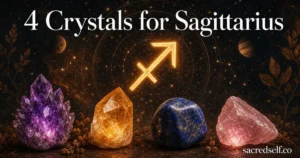
🦋 This may also speak to you: Crystals For Sagittarius
How to Tell Them Apart
Visual clues are your first tool. Flat faces and sharp edges point to a crystal, while a grainy or layered surface with mixed colors points to a rock.
A single, consistent color and uniform texture suggest a mineral. Patches of different materials suggest a rock. You can apply these steps to specimens you find outdoors or buy unpolished at a market. Pick up the piece, look at the surface, check the color consistency, and feel for flat or sharp edges. You can also hold it up to the light to check for translucency, since many crystals let light pass through and most rocks stay opaque. That quick check tells you a lot before you look anything up.
What Is Rock Crystal?
Rock crystal is a specific name for colorless, transparent quartz. It is both a mineral and a crystal, not a separate category beyond those two.
Rock crystal is often confused with glass because both are clear and smooth. You can tell them apart by differences in surface temperature, weight, and resistance to scratching. Rock crystal feels cooler to the touch than glass, weighs more for its size, and scratches glass without being scratched by it.
Rock crystal is found in many locations around the world.
Why the Difference Matters for Crystal Work
Sellers sometimes label polished rocks or glass pieces as crystals. Knowing the definitions helps you evaluate what you are actually buying instead of relying on the label alone.
Spiritual properties attributed to crystals in practice are tied to specific minerals, so the category affects which piece you reach for. If a book recommends rose quartz for heart chakra (Anahata) work, you want actual rose quartz, not a pink rock that looks similar. Gemstones in jewelry may be minerals, crystals, or composite rocks, and that distinction shapes how practitioners choose and use them in their work. Spiritual practices and crystals do not replace medical care.
🦋 Continue your journey with: 555 Angel Number Meaning
FAQs About Crystals, Minerals, and Rocks
Here are answers to the questions that come up most often when people start sorting these terms.
Are crystals minerals?
Yes, all crystals are minerals in the contexts we’re talking about, since a crystal is a mineral that also has an ordered internal structure producing visible geometry.
Are gemstones minerals or rocks?
Gemstones can be minerals, crystals, or rocks depending on their composition. Most gemstones used in fine jewelry are single minerals or crystals, though some popular stones like lapis lazuli are technically rocks made of several minerals.
How can I tell if what I found outside is a rock, mineral, or crystal?
Flat faces mean crystal, one color means mineral, mixed colors mean rock. Pick it up and look closely at the surface before you try anything else.
Is quartz the same as rock crystal?
Rock crystal is one specific variety of quartz, so all rock crystal is quartz, but not all quartz is rock crystal. Rock crystal refers specifically to the colorless, transparent form.
What rock is most often mistaken for quartz?
Quartzite is the rock most often mistaken for solid quartz because it is composed almost entirely of quartz and can look very similar. Quartzite is a metamorphic rock, so it still counts as a rock even though it’s mostly quartz.
How can you tell rock crystal from glass?
Rock crystal feels cooler, weighs more, and scratches glass without being scratched.
Is rock crystal expensive or rare?
Rock crystal is one of the most common and affordable varieties of quartz, widely available and much less costly than colored varieties like amethyst or citrine.
Are stones and crystals the same thing?
Stone is a casual word for any solid mineral or rock, while ‘crystal’ refers specifically to a mineral with an ordered internal structure. So no, they are not the same.
Final Thoughts
A crystal is a mineral with a geometric internal structure, a mineral is one defined natural substance, and a rock is a blend of minerals. Knowing which category applies helps you evaluate what you buy, understand what practitioners mean, and choose specimens with more intention. The next time you pick up a stone, can you tell which of the three it actually is?
Share your thoughts in the comments below.
Namaste. 🙏