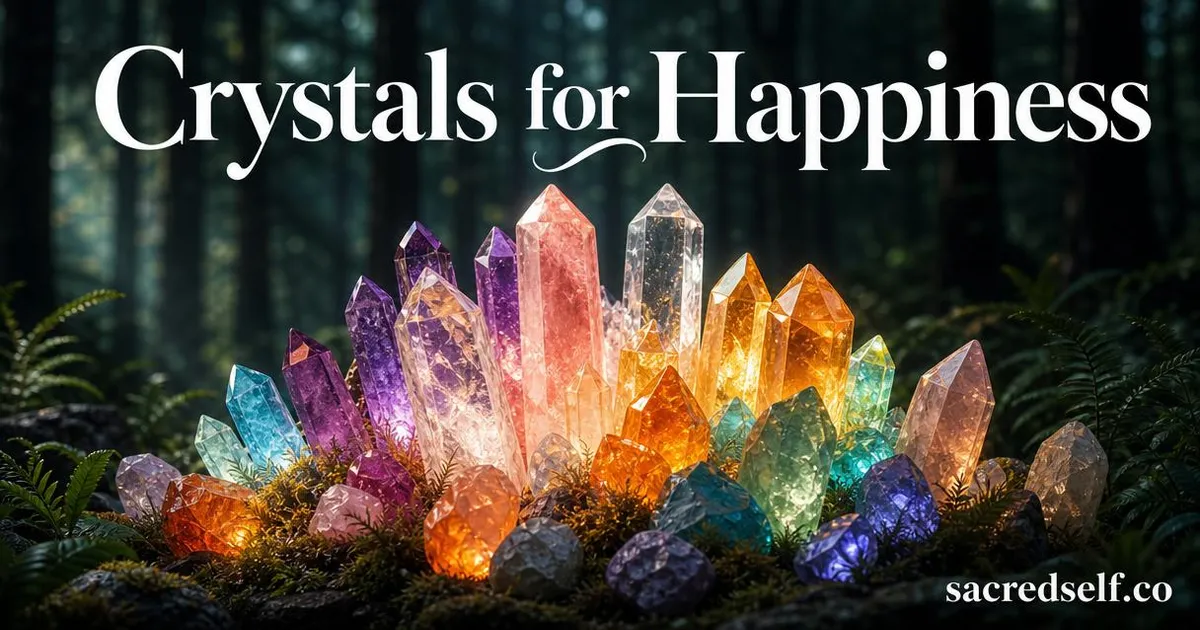
Citrine is the crystal most people reach for when they want to feel happier. It’s associated with joy, optimism, and a lighter outlook, and it’s the one you’ll see recommended again and again. Crystals can support your daily routine, but they’re not a cure for anything. Think of them as a small, steady practice that keeps your intentions visible, not a replacement for therapy, medication, or the other habits that support your mental health.
Below you’ll find seven stones people use for happiness, how to choose one that fits your situation, and simple ways to start using them today.
Key Takeaways
- Citrine is the most widely recommended crystal for joy and positive thinking.
- Rose quartz is the better choice when unhappiness comes from loneliness or being hard on yourself.
- Black tourmaline is the go-to when outside negativity drags you down.
- Carrying or wearing a crystal daily is the simplest habit to start with.
- These stones work best alongside other practices, not alone.
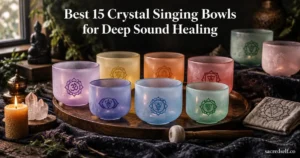
📿 Top picks on Amazon: Best Crystal Singing Bowls
How to Choose the Right Crystal for Happiness
Match the stone to what is bringing you down, not just the general goal of feeling happy. If your energy is low and everything feels flat, citrine or sunstone makes more sense than rose quartz. If your unhappiness comes from a breakup or feeling disconnected from people, rose quartz speaks to that directly. Stress and racing thoughts point toward amethyst, while draining people or a tense workplace make black tourmaline the obvious pick.
If you’re new to crystals and not sure where to start, citrine and clear quartz are the most accessible entry points. They’re easy to find, affordable, and versatile enough that you can’t really go wrong with either one. Pick the one that feels like it speaks to what you’re dealing with right now, and start there.
7 Crystals for Happiness
Crystals support wellbeing practices and do not replace medical care.
1. Citrine
Citrine is linked to joy and optimism, and it’s the stone people turn to on heavy, joyless days when motivation is hard to find. Crystal healers associate it with the solar plexus chakra (Manipura), which in yogic tradition relates to personal power and energy. The stone itself is a warm yellow or gold color, and many people say just having it nearby makes a space feel brighter.
Picture a Tuesday morning when you’re sitting at your desk and the whole week stretches ahead with nothing you’re excited about. You keep a small piece of citrine next to your laptop, and every time you notice it, it reminds you that the day could hold something good. What is one thing you would do today if you felt fully energized?
2. Rose Quartz
Rose quartz is for self-love and emotional comfort, and it’s most helpful when your unhappiness comes from loneliness, heartbreak, or harsh judgment toward yourself. It’s a soft pink stone that crystal healers connect to the heart chakra (Anahata). People reach for it when they need to be kinder to themselves, especially during times when they’re replaying mistakes or feeling unworthy of connection.
Say you’ve been going through a breakup and the evenings are the hardest part. You hold a piece of rose quartz before bed or set it on your nightstand where you can see it as you fall asleep. Write one kind thing about yourself before you go to sleep tonight.
3. Sunstone
Sunstone is linked to warmth and enthusiasm, and it works best for flat or low moods tied to seasonal changes or long stretches of low energy. Its orange and gold coloring reminds people of sunlight, and some traditions connect it to the sacral chakra (Svadhisthana), which relates to creativity and pleasure. When everything feels gray and you can’t remember the last time something excited you, this is the stone people suggest.
Think of a January afternoon when it’s been dark for hours and you’re sitting on the couch with no interest in doing anything. You carry sunstone in your pocket and hold it when you need a small lift, like a reminder that the sun will come back. What is something small that made you smile this week?
4. Carnelian
Carnelian is tied to confidence and motivation, and it’s the stone people reach for when unhappiness comes from feeling stuck, uninspired, or directionless. It’s an orange to red stone linked to the sacral chakra (Svadhisthana) in crystal traditions. When you know you need to move forward but can’t figure out how, carnelian is the one people pick to get moving again.
Imagine you have a project you keep avoiding because the size of it feels overwhelming. You wear carnelian as a bracelet or hold it for a minute before sitting down to start. Set one small goal for today and keep the stone nearby while you work on it.
5. Amethyst
Amethyst is known for calm and clarity, and it’s most useful when happiness is blocked by racing thoughts or emotional overwhelm. It’s a purple stone associated with the third eye chakra (Ajna) and the crown chakra (Sahasrara), both connected to mental stillness and perspective. When your mind won’t stop going over the same worries, amethyst is the stone people suggest for quieting things down.
You’re lying in bed at night and your brain is cycling through everything that went wrong today plus everything that might go wrong tomorrow. You hold amethyst during a short breathing exercise before sleep, or place it on your nightstand where you can see it. What recurring thought would you most like to let go of?
6. Black Tourmaline
Black tourmaline clears negative energy from draining people and environments. Crystal healers see it as a protective stone, and it’s the one people reach for after difficult social situations or in stressful workplaces. When you walk away from a conversation feeling worse than when you started, this is the stone that comes up.
Picture coming home from a family dinner where someone made a comment that’s still sitting with you hours later. You keep a piece of black tourmaline near your front door or in your bag on difficult days, and after a draining interaction, you hold it and take three slow breaths before moving on.
7. Clear Quartz
Clear quartz is versatile and amplifies intention while pairing well with any other crystal on this list. Some call it a master stone because it’s said to strengthen the properties of stones placed near it. If you’re not sure which crystal to commit to, clear quartz gives you a flexible starting point that works in almost any situation.
Each morning you hold a piece of clear quartz and name one thing you want to feel more of that day. Maybe it’s patience, maybe it’s confidence, maybe it’s just a little bit of ease. What does happiness actually look like in your everyday life right now?
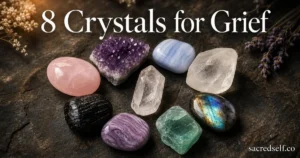
🦋 If this resonated, you might also like: Crystals For Grief
How to Use Crystals for Happiness
Three main ways to use crystals for happiness: carrying or wearing them, placing them at home, and holding them during meditation or journaling. A pocket stone or a piece of jewelry is the easiest daily habit to build because it goes where you go and requires no extra time. You can also place stones somewhere you look often, like a desk, a windowsill, or a bedside table, so they act as a visual reminder of what you’re working toward.
Cleanse your stones regularly to keep them feeling fresh. The most common methods are rinsing them under running water or leaving them in moonlight overnight. You don’t need to overthink this. Just rinse them every week or two or set them on a windowsill during a full moon, and that’s enough.
Crystal Combinations for Happiness
Citrine and clear quartz is the simplest starting pair. The citrine brings the joy and optimism, and the clear quartz amplifies that intention. If you’re pairing crystals for the first time, this combination is hard to beat.
Rose quartz and amethyst work well together when you need emotional comfort and calm at the same time. The rose quartz addresses the heart, and the amethyst quiets the mind, so they complement each other without competing.
Not every crystal needs to share the same space, though. Some are more effective when placed in separate rooms. Very protective stones like black tourmaline can overpower softer, uplifting ones in a small shared space, so it’s often better to keep them apart.
🦋 This may also speak to you: 222 Angel Number Meaning
FAQs About Crystals for Happiness
Crystals for happiness come with a few common questions.
Which crystal is most closely linked to happiness and positive thinking?
Citrine is the crystal most closely linked to happiness and positive thinking. It’s the one you’ll see recommended in nearly every source on this topic, and its association with joy, warmth, and optimism goes back a long way in crystal healing traditions.
Which crystals should not be kept together?
Black tourmaline can overpower softer stones in a shared space. They won’t cause any harm. Some suggest keeping protective stones separate from uplifting ones so the softer stones aren’t drowned out.
Can I wear a crystal for happiness every day?
Yes, you can wear a crystal every day, and it’s one of the easiest habits to maintain. A bracelet, pendant, or ring keeps the stone with you throughout the day without requiring any extra effort. Just give it a regular cleanse, and take it off if it ever feels like it needs a break.
Are there crystals I should avoid keeping in the bedroom?
Some people avoid energizing stones near the bed, like citrine or carnelian, especially if they have trouble sleeping. These stones are associated with motivation and activity, which isn’t always what you want at bedtime. If you notice they’re keeping you awake, move them to another room.
Do crystals conflict with religious or spiritual beliefs?
Crystals do not inherently conflict with any religion, and many spiritual traditions incorporate stones in some form. If your faith has specific guidelines about spiritual objects, it’s worth checking with a trusted leader or simply following your own comfort level. You can also use crystals as personal reminders of your intentions without attaching any spiritual meaning to them at all.
Is there an agreed-upon list of the most commonly recommended healing crystals?
There is no single agreed-upon list, but certain stones like clear quartz, amethyst, rose quartz, and citrine appear across most sources. Different traditions have their own preferences, so you’ll see some variation depending on who you ask. The stones in this article are the ones that come up most consistently in discussions about happiness and emotional wellbeing.
Final Thoughts
Crystals are most useful as a small, consistent practice that keeps your intentions in view. Start with one stone that suits where you are right now. Citrine is the most accessible entry point if you are not sure where to begin. Pick it up, name what you want to feel more of, and notice what shifts over time.
What is one thing you want to feel more of starting today?
Share your thoughts in the comments below.
Namaste. 🙏