
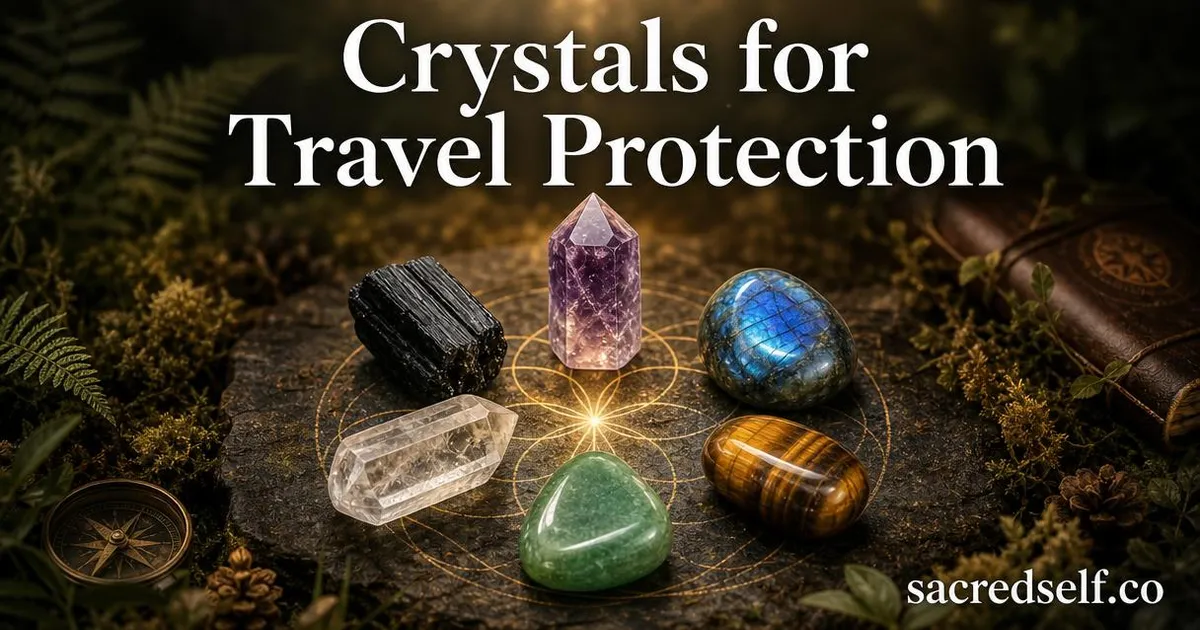
An extra layer of comfort and intention is what a lot of travelers want before a trip, whether that’s a long flight, a road trip, or time in an unfamiliar place. This list covers six crystals traditionally associated with travel protection, what each one is said to do, and simple ways to use them.
Crystals are a support practice, not a replacement for practical safety planning.
Key Takeaways
- Black tourmaline is one of the most widely recommended stones for general protection while traveling.
- Aquamarine is most often linked to water travel and sea crossings.
- Amethyst is the most commonly cited stone for easing anxiety during flights.
- Harder stones like black tourmaline and smoky quartz survive bag friction and airport screening better than softer ones.
- Carrying a crystal in a pocket or small pouch is the simplest way to keep it close during transit.
- Crystals support a sense of calm and focus but do not replace travel insurance, safety precautions, or medical care.
🪷 Tools for your ritual: Best Amethyst Geodes
How to Choose Crystals for Travel Protection
The crystal you pick should match both the kind of trip you’re taking and the conditions the stone will go through.
Match the crystal to the type of travel. Water journeys, flights, road trips, and solo travel each have traditionally associated stones. Aquamarine pairs with water, malachite with road trips, amethyst with flights.
Consider durability. Stones that scratch easily or react to moisture may not hold up well in a bag or through airport security. A soft stone like malachite needs wrapping, while a hard stone like black tourmaline can take more rough handling without damage.
Avoid stones commonly faked in tourist markets. If a stone looks too perfect or too cheap for its size, it may not be what the seller claims. Buy from a source you trust before you travel instead of at a tourist market stall.
6 Crystals for Travel Protection
Six stones come up most often in travel protection traditions, each suited to a different kind of trip.
1. Black Tourmaline
Black tourmaline is widely known for protection from negative energy and creating a sense of safe boundaries in unfamiliar environments. Crystal practitioners often recommend it as a default protection stone, and it’s one of the harder common crystals, so it holds up well in bags and pockets.
Say you’re walking through a crowded airport terminal and feeling exposed or uneasy. You keep a small tumbled piece in your jacket pocket and reach for it when the crowd gets overwhelming. Where in your travel day do you most want a grounding anchor?
2. Malachite
Malachite has been called a guardian stone and is linked to protection during journeys across many cultural traditions. It’s most often associated with land travel, especially road trips where the journey itself matters as much as the destination.
Picture a long drive on back roads with your bag in the passenger seat. A piece of malachite sits on the dashboard for the whole trip, marking the fact that you’re on the road. Wrap malachite in a soft cloth before packing, as it scratches more easily than other travel stones.
3. Aquamarine
Aquamarine is historically linked to safe passage over water and protection for sailors and sea travelers. Its name means ‘water of the sea,’ and it’s the crystal most often linked to ocean crossings, ferry rides, and beach trips.
You’re boarding a ferry and the water is choppy. Wearing aquamarine as a bracelet keeps it close to your body during the crossing, and you glance at it when the boat rocks. Does the idea of water travel bring up any specific worry this stone could help you sit with?
4. Moonstone
Moonstone is linked to safe travel for new beginnings and unfamiliar routes, and it’s associated with the energy of safe return. It comes up most in traditions around setting out on a path you’ve never taken before.
Imagine you’re traveling to a new country alone for the first time, and you’re not sure what to expect. Holding the moonstone briefly before departure gives you a moment to think about why you’re going. Set a short intention out loud or in writing while holding the stone before you leave home.
5. Amethyst
Amethyst is one of the most cited stones for calming anxiety and is commonly recommended for nervous flyers.
You’re on a plane and the seatbelt sign comes on. Keeping a small piece in the bag you hold under the seat means you can reach for it during takeoff and feel the cool surface in your palm. What part of travel tends to feel most overwhelming, and would having something in hand help? Crystals do not replace medical care for anxiety or panic disorders.
6. Smoky Quartz
Smoky quartz is used for clearing negative energy and grounding, which travelers often want after long or draining journeys. It’s a hard stone, so it travels well and can sit in a bag without much risk of damage.
You arrive at your hotel after twelve hours of flights and layovers, and the room feels impersonal and unsettled. Placing the smoky quartz in the corner of the room or on the bedside table becomes a signal to your body that you have arrived and can rest. Set it out when you unpack as that signal.
Note that crystals support wellbeing practices and do not replace medical care.
🦋 Others who searched this also read: Crystals For Leo
How to Carry and Pack Crystals When Traveling
The way you carry a crystal depends on the moment in your trip. Body jewelry keeps it on you at all times, pocket pouches work for transit, day bags are good for excursions, car dashboards suit road trips, and hotel room placement helps on arrival.
Airport security is straightforward with crystals. They’re generally allowed in both checked luggage and the bag you carry into the cabin, though unusually large pieces may draw a second look from screeners. If a TSA agent pulls your bag aside, a quick explanation is usually all it takes.
Pack stones individually in soft cloth or clothing to prevent damage. Harder stones can scratch softer ones if packed together, so keep them separated or wrap each one. A small drawstring pouch works well for tumbled stones.
A few simple options work for cleansing on the road. Leave a stone in sunlight or moonlight through a window, or use breath and intention when water or soil aren’t available. You don’t need a full ritual to reset a stone between stops.
Common Mistakes and What Crystals Cannot Do
Packing soft or brittle stones loose in a bag is the most common way crystals get damaged during travel. Friction and pressure will chip or crack them, especially if they’re rattling around with keys, chargers, and toiletries.
Buying crystals at tourist markets without checking for fakes is another pitfall. Dyed glass and low grade dyed quartz are often passed off as higher value stones at stalls in popular destinations. If you want a stone for travel, buy it before you leave from someone you trust.
Expecting a crystal to prevent accidents misunderstands what they are. They’re focus tools, not guarantees. A stone in your pocket doesn’t make you invincible.
Don’t skip practical safety steps in favor of relying solely on crystals. Travel insurance, medication, local emergency information, and basic situational awareness all matter more than any stone. Crystals support wellbeing practices and do not replace medical care.
🦋 Others who searched this also read: Opalite Spiritual Meaning And Benefits
FAQs About Crystals for Travel Protection
A few practical questions come up again and again when people travel with crystals.
What Is the Single Best Crystal for Travel Protection?
Black tourmaline is the most widely recommended single stone for travel protection. It’s durable, easy to find, and tied to shielding and centering in unfamiliar environments.
Can You Take Crystals Through Airport Security and on a Plane?
Crystals are generally allowed on planes in both checked and cabin bags. Standard tumbled stones and jewelry pass through security without issue.
Which Crystals Hold Up Best in a Bag and Are Safest to Pack in Checked Luggage?
Harder stones like black tourmaline and smoky quartz survive bag friction and airport screening better than softer ones. Both rank at 7 or above on the Mohs hardness scale, which means they resist scratching and chipping well.
What Crystal Helps With Anxiety During Flights?
Amethyst is the most commonly recommended stone for flight anxiety. Crystal practitioners associate it with calming the mind and easing nervous energy, and many travelers keep a small piece in their bag for this reason.
Which Crystal Is Linked to Safe Travel on Water?
Aquamarine is most often linked to water travel and sea crossings.
How Do You Cleanse Crystals While You Are Traveling?
The simplest options for cleansing on the road are sunlight, moonlight through a window, or breath and intention. You can also use soil or natural water if you have access to it, but those aren’t necessary when you’re staying in hotels.
Are There Crystals in Tourist Markets That Are Commonly Faked?
Dyed glass and low grade dyed quartz are commonly sold as higher value stones in tourist markets. If a stone looks too brightly colored or too cheap for its size, be cautious and buy from a reputable source instead.
Can Crystals Replace Practical Travel Safety Precautions?
Crystals cannot replace travel insurance or safety planning. They’re intention tools that support a sense of calm and focus, not substitutes for practical precautions or medical care.
Final Thoughts
Each of these six stones carries a tradition of travel protection and can serve as a simple centering ritual before or during a trip. Choose one or two that match your specific type of travel rather than packing them all, and use them as a cue to set a clear aim.
A good next step is to pick the crystal that matches your most common travel situation and try carrying it on your next trip, even a short one. What trip do you have coming up that could use a small stabilizing ritual?
Share your thoughts in the comments below.
Namaste. 🙏