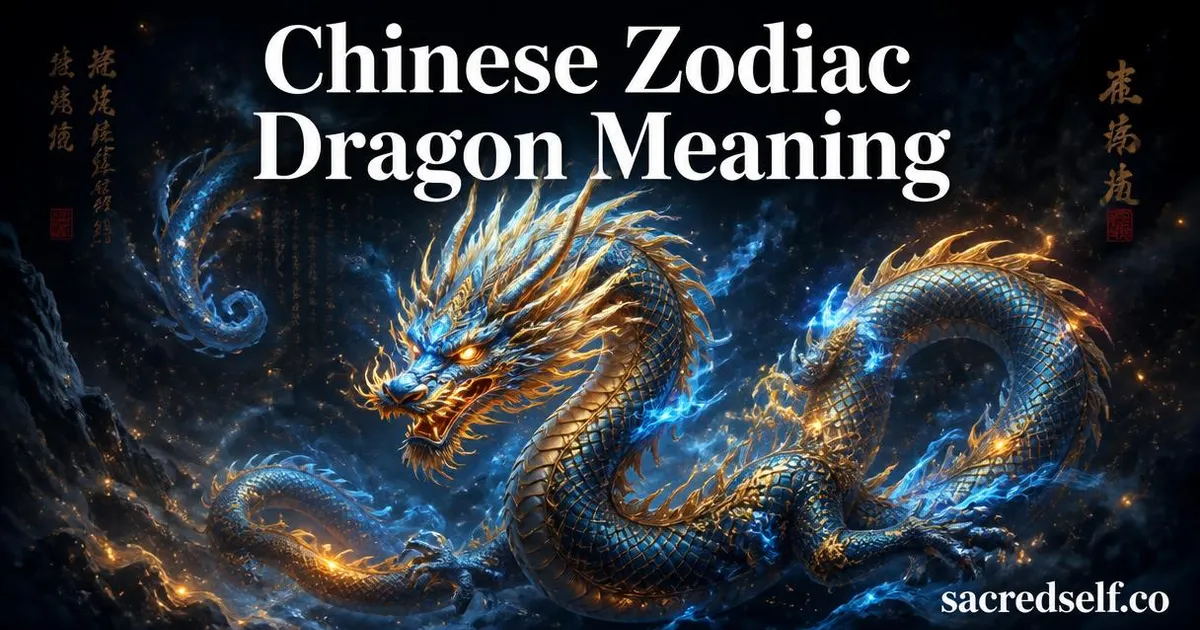
The Dragon is the only mythical creature in the Chinese zodiac. While the other eleven animals exist in the physical world, the Dragon represents something beyond: imperial power, transformation, the heavens themselves. This isn’t an accident. In Chinese culture, being born in a Dragon year is considered exceptionally fortunate.
Perhaps you’re here because you were born in a Dragon year, or someone you love was. Maybe you’re trying to understand a Dragon personality in your life, or you’re expecting a child in 2024. Chinese astrology offers a framework for self-reflection and understanding, not a fixed script for who you must be.
This article explores Dragon traits, how the five elements shape expression, compatibility patterns, and cultural context. These are tools for awareness, not limitations. Your choices, experiences, and values matter far more than your birth year.
Key Takeaways
- The Dragon is the fifth animal in the Chinese zodiac, symbolizing strength, confidence, independence, and charisma
- Dragon years include 1964, 1976, 1988, 2000, 2012, and 2024 – each influenced by one of five elements (Wood, Fire, Earth, Metal, Water)
- Dragons are natural leaders who often struggle with asking for support while projecting complete self-sufficiency
- Strongest compatibility is with Rat, Monkey, and Rooster; more challenging with Dog and Rabbit
- Lucky signs (colors, numbers, directions) are symbolic guidance, not rigid cosmic rules
🔮 Our readers’ favorites on Amazon: Best Tongue Drums
How the Dragon Became Part of the Chinese Zodiac
According to legend, the Jade Emperor announced a race to determine the zodiac order. The first twelve animals to cross the river would earn their place. The Dragon, capable of flight, should have arrived first – but came in fifth instead.
Why? The Dragon stopped mid-race to create rain for drought-stricken villagers. Then it paused again to help the Rabbit cross the river by creating a helpful gust of wind. Power used in service of others – that’s the Dragon’s character in myth.
This story is metaphor, not history. It conveys values: that true strength includes compassion, that leadership means responsibility, that privilege comes with obligation. The Dragon’s position as the only mythical creature among the twelve animals reinforces its association with yang energy, imperial authority, and divine favor.
In Chinese culture, the Dragon represents heaven itself. Emperors were called “sons of the Dragon.” Dragon imagery appears on robes, architecture, and festival celebrations as a symbol of prosperity and protection.
Years of the Dragon & the Five Elements
The Chinese zodiac follows a 60-year cycle, combining twelve animals with five elements. This means each animal appears five times per cycle, each with a different elemental influence.
Dragon Years in the Modern Calendar
Recent and upcoming Dragon years include:
- 1964 – Wood Dragon
- 1976 – Fire Dragon
- 1988 – Earth Dragon
- 2000 – Metal Dragon
- 2012 – Water Dragon
- 2024 – Wood Dragon
- 2036 – Fire Dragon
The Chinese zodiac follows the lunar calendar, so Dragon years typically begin in late January or early February. If you were born near the boundary – late January or early February – check the exact date of Lunar New Year for your birth year to confirm your sign.
How the Five Elements Shape Dragon Personalities
Wood Dragon (1964, 2024): More cooperative and creative than other Dragons. Wood Dragons consider others’ perspectives and work well in teams. They’re less domineering, more willing to adapt, and often channel their ambition into artistic or humanitarian pursuits.
Fire Dragon (1976, 2036): Intense, passionate, competitive. Fire Dragons are natural leaders with strong opinions and high standards. They inspire others but can become impatient or overly critical when people don’t match their pace or vision.
Earth Dragon (1988, 2048): Grounded, realistic, socially aware. Earth Dragons balance ambition with practicality. They understand long-term strategy and build stable foundations rather than chasing every exciting opportunity. More diplomatic than other Dragons.
Metal Dragon (2000, 2060): Determined, strong-willed, direct. Metal Dragons value honesty and clear communication. They pursue goals with focus and intensity but can be inflexible or uncompromising when they believe they’re right.
Water Dragon (2012, 2072): Adaptable, empathetic, collaborative. Water Dragons have less need for control than other Dragons. They listen well, adjust to circumstances, and work effectively with diverse personalities. More emotionally attuned.
These are frameworks, not personality prescriptions. Your element influences tendencies, but your individual experiences, choices, and values shape who you are far more than your birth year.
Core Personality Traits of the Dragon
Dragons across all elements share certain baseline characteristics that make the sign recognizable.
General Dragon Characteristics
Dragons are confident, charismatic, ambitious, and energetic. They naturally draw attention and respect, often without trying. People notice when a Dragon enters a room.
They have a strong sense of justice and idealism. Dragons dislike dishonesty, pettiness, and behavior they perceive as beneath dignity. They hold themselves and others to high standards.
Independence defines Dragon energy. They’re self-reliant, sometimes to a fault. Many Dragons struggle to ask for help or show vulnerability, even when they need support. They’d rather handle everything alone than risk appearing weak.
Dragons are enthusiastic starters. They launch projects with energy and vision but can lose interest if work becomes routine or progress slows. The initial spark matters more than tedious follow-through.
Do these traits resonate with your experience, or do you express Dragon energy differently? There’s no single correct way to embody this sign.
Dragon Men
Dragon men tend to be assertive, goal-oriented, and protective of loved ones. Many prioritize career success and public achievement, measuring worth through visible accomplishment.
They often appear emotionally reserved but are deeply loyal to people they trust. Dragon men may struggle with vulnerability, seeing emotional openness as weakness rather than strength.
Consider how cultural expectations around masculinity might shape how these traits show up. A Dragon man raised to value stoicism will express his energy differently than one encouraged to explore feelings.
Dragon Women
Dragon women are often independent, outspoken, and confident in both professional and personal life. Many challenge traditional gender roles and value equality in relationships.
They balance nurturing instincts with strong personal ambition. Dragon women rarely choose between career and family – they pursue both on their own terms.
Notice where you feel pressure to soften your strength or amplify it. Dragon women often navigate conflicting messages about how much space they’re allowed to take up.
Personality Across Different Dragon Years
A 1988 Earth Dragon and a 1976 Fire Dragon may both be ambitious, but they express confidence very differently. The Earth Dragon builds methodically; the Fire Dragon moves fast and expects others to keep up.
Birth year is one thread in a complex identity. Upbringing, culture, personal choices, mental health, relationships – all these shape who you become. Use zodiac insights as one lens, not the only lens.
🦋 Readers often explore this next: Chinese Zodiac Tiger
Lucky & Unlucky Signs for Dragons
Chinese astrology assigns lucky and unlucky elements to each zodiac sign. These are traditional symbolic associations rooted in Five Elements theory and cultural metaphor.
Lucky Elements
- Numbers: 1, 6, 7
- Colors: Gold, silver, grayish white
- Directions: East, north, south
- Flowers: Bleeding-heart glory bower, dragon flowers
Unlucky Elements
- Numbers: 3, 8, 9
- Colors: Blue, green
- Directions: Northwest
These are cultural metaphors, not cosmic laws. Wearing blue won’t doom you. Encountering the number 8 won’t ruin your day.
If these associations feel meaningful, use lucky elements as reminders or confidence boosters. Wear gold when you need to feel powerful. Notice when you face east during important decisions. Let symbols support your intention.
But don’t treat them as superstitions you must follow. The meaning comes from what you bring to the symbol, not from the symbol itself.
Love & Compatibility for Dragons
Compatibility in Chinese astrology is based on how different signs’ energies interact – whether they complement, challenge, or clash with each other.
Best Matches
Dragon and Rat: Mutual admiration and complementary strengths. Rat’s cleverness and social intelligence balance Dragon’s boldness and vision. Both are ambitious and enjoy excitement. Rat appreciates Dragon’s confidence; Dragon values Rat’s strategic thinking.
Dragon and Monkey: Playful, dynamic partnership. Both signs enjoy intellectual stimulation, adventure, and spontaneity. Monkey’s wit entertains Dragon; Dragon’s intensity fascinates Monkey. They challenge each other in productive ways.
Dragon and Rooster: Rooster’s practicality grounds Dragon’s ambition. Both value achievement and respect competence. Rooster handles details Dragon overlooks; Dragon provides vision Rooster can implement. Mutual respect and shared goals create stability.
Challenging Matches
Dragon and Dog: Different core values create friction. Dog prizes loyalty, caution, and consistency. Dragon values independence, risk-taking, and transformation. Dog sees Dragon as reckless; Dragon sees Dog as pessimistic. Both can feel misunderstood.
Dragon and Rabbit: Rabbit needs peace, subtlety, and emotional security. Dragon’s intensity and directness can feel overwhelming. Rabbit may seem too passive or indirect to Dragon. Dragon may seem too aggressive or demanding to Rabbit.
What Compatibility Really Means
These are tendencies, not verdicts. Many Dragons have fulfilling relationships with “incompatible” signs. Compatibility insights highlight potential friction points worth discussing openly, not relationship fate.
Personal growth, communication, and shared values matter far more than zodiac alignment. A Dragon and Dog who both prioritize honesty and commit to understanding each other’s needs can build a strong relationship. A Dragon and Rat who avoid difficult conversations will struggle despite “perfect” compatibility.
Notice what you value in relationships. Does traditional compatibility advice match your lived experience? Use it as one data point, not the deciding factor.
Career & Work Life for Dragons
Dragons thrive in environments that offer autonomy, challenge, visibility, and room for bold ideas. They need to feel like their work matters and that they’re making visible progress.
Best Career Paths
- Leadership roles: CEO, manager, director, entrepreneur, team lead
- Creative fields: Architect, designer, advertising, entertainment, artist
- Public-facing work: Politician, lawyer, journalist, performer, spokesperson
- Careers requiring vision and risk-taking: Investor, startup founder, innovator, strategist
Why these fit: Dragons need autonomy. They want to shape direction, not just follow orders. They excel when they can see the impact of their work and receive recognition for achievement.
Creative fields allow Dragons to channel their vision into tangible form. Leadership positions leverage their natural charisma and confidence. Public-facing roles use their comfort with attention and ability to inspire.
Careers That May Feel Limiting
- Highly repetitive or routine work without growth opportunities
- Roles requiring excessive caution or bureaucracy
- Positions where they must defer constantly without input
- Jobs with little visibility or recognition for effort
This doesn’t mean Dragons can’t succeed in these environments. Awareness of needs helps you navigate challenges. A Dragon in a bureaucratic role might find fulfillment by leading a side project or mentoring junior colleagues.
Practical Reflection
If you’re a Dragon feeling stuck at work, ask yourself:
- Do I have enough autonomy to make meaningful decisions?
- Am I growing, or have I plateaued?
- Do I feel seen and valued for my contributions?
- Does this work align with my values, or am I chasing external validation?
Consider what “success” means to you beyond external achievement. Dragons can burn out chasing recognition and status while ignoring whether the work itself fulfills them.
🦋 Our readers also explored: Chinese Zodiac Ox
Financial Outlook for Dragons
Dragons often have strong earning potential. Their ambition, leadership ability, and confidence help them advance in careers and pursue lucrative opportunities.
The risk: impulsiveness or overconfidence can lead to unwise investments or overspending. Dragons sometimes chase exciting opportunities without thoroughly evaluating risk. They may overspend to project success or maintain a certain image.
Traditional advice suggests balancing bold moves with practical planning. Consult trusted advisors before major financial decisions. Create systems – budgets, automatic savings, investment strategies – that support your goals without requiring constant willpower.
Reflect on your relationship with money. Does it represent security, freedom, status, power, or something else? Dragons sometimes use money to prove themselves or gain independence, which can drive both success and reckless choices.
Health & Lifestyle Guidance for Dragons
Dragons’ high energy and drive serve them well – until they don’t. Many Dragons push themselves too hard, ignore warning signs, and burn out.
Common health vulnerabilities include digestive issues (often stress-related), tension headaches, exhaustion from overcommitment, and difficulty sleeping due to racing thoughts.
Traditional recommendations focus on balance. Regular physical activity channels Dragon energy productively – martial arts, competitive sports, hiking, dancing. Movement helps process stress and intensity.
Mindfulness or meditation practices balance Dragons’ natural intensity. Even five minutes daily of focused breathing can help. The challenge is slowing down long enough to do it.
Prioritize sleep and downtime. Dragons often view rest as weakness or wasted time. Reframe it: rest is what allows you to perform at your best. You can’t sustain peak output without recovery.
Emotional health deserves attention too. Dragons struggle to admit vulnerability or ask for support. Practice letting others in. Asking for help is a strength, not a weakness. Isolation amplifies stress.
Dragons’ Fortune in 2026 & 2027
Annual forecasts in Chinese astrology offer broad trends based on how your zodiac sign interacts with the year’s ruling animal. These are general tendencies, not personal predictions.
2026 Outlook
2026 is generally favorable for Dragons. Career advancement is likely, along with stable income and recognition for past efforts. Projects you’ve invested in may finally bear fruit.
Relationships require extra attention. Your natural focus on work and ambition may leave personal connections neglected. Balance drive with presence. Make time for people who matter.
Health remains strong if you maintain balance. The risk is overextension – saying yes to every opportunity and spreading yourself too thin. Protect your energy.
2027 Outlook
2027 brings new opportunities but also increased challenges or competition. You’ll need to work harder for results that came more easily in 2026.
Focus on consolidating gains rather than chasing every new possibility. Depth over breadth. Finish what you started before launching something new.
Financial caution is advised. Avoid impulsive investments or major purchases without thorough research. This is a year for patience and careful planning, not bold risks.
Remember: Your choices shape outcomes more than astrology. Annual forecasts are prompts for reflection, not scripts to follow. Use them to notice patterns and adjust accordingly.
🦋 Continue your journey with: Chinese Zodiac Rabbit
Cultural & Spiritual Perspectives on the Dragon
The Dragon carries deep symbolic weight in Chinese culture, rooted in thousands of years of philosophy, mythology, and spiritual practice.
Dragon Symbolism in Chinese Culture
The Dragon represents imperial power and divine authority. Emperors wore dragon robes; the throne was called the Dragon Throne. To be Dragon-born was to carry a piece of heaven’s favor.
In feng shui, Dragons symbolize prosperity and protection. They’re often paired with the Phoenix, which represents yin energy – together they balance masculine and feminine forces. Dragon imagery appears in homes and businesses to attract good fortune.
Dragon dances during Lunar New Year invoke blessings and drive away negativity. The dragon puppet, animated by dancers, brings communities together in celebration and renewal.
Unlike Western dragons – often depicted as dangerous, greedy, or evil – Chinese Dragons are benevolent and wise. They control water, weather, and harvests. They bring rain to nourish crops. They protect rather than destroy.
Five Elements Theory (Wu Xing)
Chinese astrology is rooted in Taoist cosmology. The Five Elements – Wood, Fire, Earth, Metal, Water – interact in cycles of generation and control. Each element influences personality, health, fortune, and compatibility.
Wood feeds Fire. Fire creates Earth (ash). Earth contains Metal. Metal enriches Water (minerals). Water nourishes Wood. This is the generative cycle.
Wood parts Earth. Earth absorbs Water. Water quenches Fire. Fire melts Metal. Metal chops Wood. This is the controlling cycle.
Dragons embody yang energy but are balanced by their element. A Water Dragon has more yin influence than a Fire Dragon. Understanding this offers nuance beyond the zodiac animal alone.
Five Elements theory extends beyond astrology into medicine, martial arts, architecture, and daily life. It’s a way of understanding how different energies interact and seek balance.
Dragons in Other Traditions
Dragons appear across cultures with varied meanings. European myths like Saint George and the Dragon portray dragons as obstacles to overcome – symbols of chaos or greed. Japanese dragons (ryū) are water deities associated with wisdom and strength, similar to Chinese dragons but with distinct characteristics.
This article focuses on the Chinese zodiac Dragon specifically, not universal dragon symbolism. Context matters when interpreting symbols.
Famous People Born in the Year of the Dragon
Looking at notable Dragons shows how the sign’s energy expresses across different fields, personalities, and life paths.
- Bruce Lee (1940, Metal Dragon): Martial artist, actor, philosopher who founded Jeet Kune Do and revolutionized martial arts while breaking cultural barriers. Embodied Dragon confidence, intensity, and vision.
- Martin Luther King Jr. (1929, Earth Dragon): Civil rights leader whose charisma, moral courage, and leadership transformed American society through the Montgomery Bus Boycott and March on Washington. Earth Dragon’s grounded idealism and social awareness.
- Rihanna (1988, Earth Dragon): Singer, entrepreneur, fashion icon who built Fenty Beauty and a multi-industry empire while maintaining creative authenticity. Dragon ambition and independence.
- Keanu Reeves (1964, Wood Dragon): Actor known for both intense roles in The Matrix and John Wick and exceptional kindness off-screen. Wood Dragon’s collaborative spirit and willingness to help others.
- Adele (1988, Earth Dragon): Singer-songwriter whose powerful voice and emotional honesty in albums like 21 and 25 earned global recognition. Dragon charisma with Earth Dragon’s authenticity.
- John Lennon (1940, Metal Dragon): Musician, activist, visionary who co-founded The Beatles and challenged conventions through both music and activism. Metal Dragon’s determination and directness.
These examples show Dragon traits – leadership, charisma, bold vision, independence – but fame isn’t the only expression of Dragon energy. Everyday acts of courage, creativity, and standing up for what matters count just as much.
What Should I Do with This Information?
Treat Chinese astrology as a tool for self-awareness, not a rulebook. These insights are mirrors for reflection, not scripts you must follow.
Ask yourself:
- Where do you see Dragon traits showing up in your life? Where do you resist them?
- Are you balancing your need for independence with allowing others to support you?
- What does “success” or “ambition” mean to you, beyond external recognition?
- If compatibility feels off with a partner, what specific needs or values are clashing – and can you talk about them openly?
Frequently Asked Questions
What is the Chinese Dragon personality?
Dragons are typically confident, charismatic, ambitious, and independent. They’re natural leaders with strong ideals and a dislike for dishonesty. While they project strength, they often struggle to show vulnerability or ask for support.
Element and life experience shape how these traits express – Fire Dragons are more intense, Water Dragons more adaptable, Earth Dragons more grounded.
Who is a Dragon compatible with?
Dragons are most compatible with Rat, Monkey, and Rooster. Rat’s cleverness balances Dragon’s boldness. Monkey matches Dragon’s energy and wit. Rooster’s practicality grounds Dragon’s ambition.
Challenging matches include Dog (different values around loyalty and risk) and Rabbit (Dragon’s intensity overwhelms Rabbit’s need for peace). Compatibility describes tendencies, not destiny – successful relationships depend on communication and shared values more than zodiac alignment.
What year is bad luck for Dragons?
In Chinese astrology, your zodiac year (benming nian) is traditionally considered challenging because you “offend” the presiding deity. For Dragons, this includes 2024, 2036, and every twelve years. Wearing red is thought to offer protection.
However, many Dragons have positive experiences in their zodiac year. Your mindset, choices, and actions matter more than superstition. Treat it as a year to be mindful, not fearful.
Is Dragon the luckiest Chinese zodiac?
The Dragon is often considered the most auspicious sign in Chinese culture due to its association with imperial power, prosperity, and divine favor. Many families specifically plan to have children in Dragon years.
However, “luckiest” is subjective – each sign has strengths and challenges. What matters more is how you work with your traits, not ranking signs against each other.
What are the top 3 most powerful Chinese zodiac signs?
Traditionally, Dragon, Tiger, and Horse are seen as the most powerful due to their yang energy, leadership qualities, and dynamic nature.
But “power” shows up differently across signs. Rat’s intelligence, Ox’s perseverance, Snake’s wisdom, and Rooster’s precision are equally valuable. Avoid hierarchies. Each sign offers unique strengths suited to different situations.
What color dragon is good luck?
In Chinese culture, gold and red dragons symbolize prosperity, celebration, and imperial power. These colors appear in festivals, art, and architecture.
Within the zodiac, elemental dragons – Wood, Fire, Earth, Metal, Water – each have significance. For personal luck, Dragons’ favorable colors are gold, silver, and grayish white according to traditional associations.
Is 2026 a lucky year for Dragons?
Yes, 2026 is generally favorable for Dragons according to traditional forecasts. Career advancement, stable income, and recognition for past efforts are likely.
Balance work ambition with personal relationships, which may need extra attention. Maintain health through rest and boundaries – avoid overextension. Remember, annual predictions are broad tendencies. Your actions and choices shape your year more than astrology.
Which Chinese Dragon is the most powerful?
In mythology, the Imperial Dragon (often golden) is most revered, representing ultimate authority and heaven’s favor.
Among zodiac elements, Fire Dragon is considered most intense and commanding, while Metal Dragon is most determined and strong-willed. “Powerful” depends on context – Water Dragon’s adaptability or Earth Dragon’s stability can be equally strong in different situations. Wood Dragon’s collaborative spirit is its own form of power.
What are the lucky numbers for Dragons?
Dragons’ lucky numbers are 1, 6, and 7. Unlucky numbers are 3, 8, and 9. These are traditional symbolic associations rooted in Five Elements theory and numerology.
Use them as confidence boosters if they feel meaningful – choose apartment 16 over 38, wear jersey number 7. But don’t stress over encountering “unlucky” numbers. They’re cultural metaphors, not cosmic rules that control your fate.
What does the Dragon mean in Chinese culture beyond the zodiac?
The Dragon symbolizes imperial authority, prosperity, transformation, yang energy, and heaven itself. It’s the only mythical creature in the zodiac, representing divine power and benevolence.
Dragons appear in feng shui as symbols of protection and good fortune, often paired with the Phoenix. Dragon dances during festivals invoke blessings and drive away negativity. Unlike Western dragons (often depicted as evil), Chinese Dragons are wise, benevolent, and associated with water, weather, and abundance.
Can a Dragon and Dog relationship work despite incompatibility?
Yes. Zodiac compatibility describes potential friction points, not relationship fate. Dragon and Dog have different core values – Dragon prizes independence and risk-taking, Dog values loyalty and caution. This can create misunderstandings.
But awareness, honest communication, shared goals, and mutual respect can bridge differences. Many “incompatible” signs build fulfilling relationships through effort and understanding. Focus on what you both value and practice talking about needs openly.
What if I’m a Dragon but don’t feel confident or ambitious?
Zodiac traits are broad tendencies, not prescriptions for who you must be. Your element, upbringing, life experiences, mental health, and personal values all shape your personality.
You might express Dragon energy differently – through quiet determination, creative vision, deep loyalty, or protecting people you love rather than pursuing public leadership. There’s no “wrong” way to be a Dragon. Reflect on what confidence and ambition mean to you personally, not according to cultural stereotypes.
Final Thoughts
The Dragon offers a framework for understanding strength, independence, and the courage to pursue your vision – but you’re not limited by your zodiac sign. Use these insights as mirrors for self-reflection, not scripts to follow.
Your element, experiences, and choices shape who you are far more than your birth year. A Water Dragon born in 2012 will express confidence differently than a Fire Dragon born in 1976. Both are valid expressions of Dragon energy.
What parts of the Dragon resonate with you, and where do you express your energy differently? How can you balance your drive with rest, your independence with connection? Where might you need to ask for help or show vulnerability?
If you’re a Dragon or love one, share your experience in the comments. How do these traits show up in your life? What surprises you about Dragon energy?
Namaste. 🙏