If you are looking into crystals for healing, you probably want to know which stone actually fits your situation, not just a long list with no context. This article walks through 12 commonly used healing crystals, what each one is traditionally associated with, and how to bring them into your everyday life.
Crystals are a support practice, not a replacement for medical or mental health care. Think of them as something that sits alongside the other things you do to feel better, not something that stands in for a doctor or therapist.
Key Takeaways
- Amethyst and selenite are among the most consistently recommended stones for calming an overactive or anxious mind.
- Rose quartz is the stone most widely linked to emotional healing and self-compassion.
- Clear quartz is considered a general purpose crystal, making it the most practical starting point for beginners.
- Using two stones together can address different layers of the same problem at once.
- Choosing a crystal by how it feels to hold or which one draws your attention is a widely accepted starting point.
- Crystals support wellbeing practices and do not replace medical care.
💫 Our top rated picks on Amazon: Best Spiritual Stone Bracelets
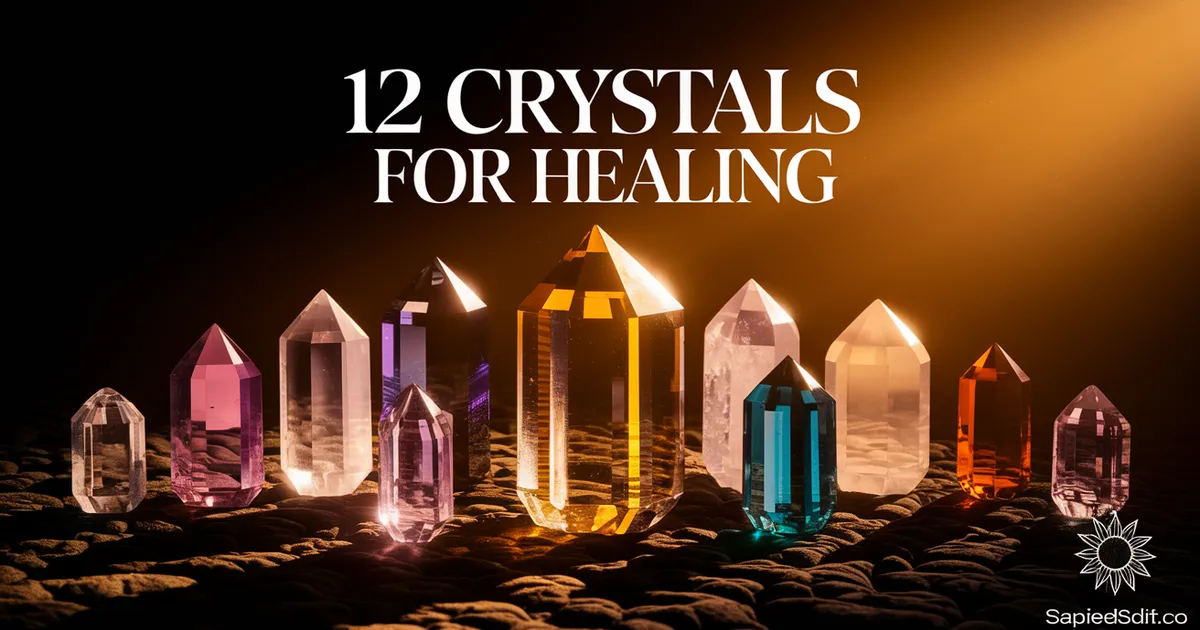
12 Crystals for Healing
Here are twelve stones that appear again and again in crystal healing, each with its own traditional association and a simple way to use it.
1. Amethyst
Amethyst is traditionally linked to calming the mind, easing stress, and supporting rest. It suits someone dealing with anxious thoughts or disrupted sleep, and it is one of the first stones crystal healers recommend for the feeling of not being able to turn off your thoughts at night.
Picture lying in bed replaying the day while your mind refuses to slow down. Some people keep a piece of amethyst on the nightstand or hold it during a few slow breaths before bed, letting the stone be a simple reminder to slow down.
2. Rose Quartz
Rose quartz is the stone people associate most often with emotional healing, self-compassion, and releasing grief or resentment after heartbreak or a difficult period. It is linked to the heart chakra (Anahata) and comes up frequently in work around forgiveness and kindness toward yourself.
Think about a relationship that ended months ago but still sits heavy in your chest, or a time you were hard on yourself when you really needed patience. Holding rose quartz while you sit quietly can be a way of sitting with that feeling instead of avoiding it. What emotion have you been carrying that you feel ready to set down?
3. Clear Quartz
Clear quartz is considered a versatile, general purpose stone said to support clarity and amplify intention. Crystal healers often recommend it as a first crystal when no specific need stands out, because it is associated with focus and clear thinking in a broad way.
Maybe you are new to crystals and not sure where to start, or you just want something simple to hold during a morning pause. Hold clear quartz while stating one simple, specific intention for the day, like being patient in a meeting or taking a real lunch break.
4. Black Tourmaline
Black tourmaline is used for protection and clearing draining energy. It suits someone who feels depleted after social interactions or a stressful environment, and crystal healers often recommend it for people who absorb the emotional weight of the people around them.
Imagine coming home from a crowded office or a family gathering feeling like you gave everything you had and have nothing left. Some people keep black tourmaline near the front door or in a pocket during the day as a small buffer between themselves and whatever they walk into. Is there a space in your home or routine that consistently leaves you feeling drained?
5. Citrine
Citrine is connected to positive energy and motivation, and people often choose it during periods of low confidence, creative blocks, or persistent low mood. Its warm golden color is associated with the solar plexus chakra (Manipura), which in traditional chakra systems relates to personal power and self worth.
If you have been dragging through afternoons at work or feeling stuck on a project that used to excite you, keep citrine on a desk or workspace where you need a lift during the day, somewhere you will see it when your energy dips.
6. Selenite
Selenite is used for clearing heavy or stagnant energy from a room and for calming the mind before meditation or sleep. It is also used to refresh other crystals, since it is one of the few stones believed to be naturally clearing and able to cleanse the stones placed near it.
Picture walking into a room that just feels stuck, like the air has not moved in days, or a mood you cannot shake after a hard week. Placing a selenite tower in that room or holding a piece before bed can be a way of resetting the feel of the space. Which area of your home or daily routine feels heavy or stuck right now?
7. Carnelian
Carnelian is associated with energy, motivation, and creative drive. It suits someone rebuilding confidence after a setback or beginning something new, and its orange tone is traditionally linked to the sacral chakra (Svadhisthana), which relates to creativity and passion in the chakra system.
Say you got passed over for a promotion or a creative project fell apart and you are trying to get back into it without the spark you had before. Carry carnelian in a pocket during any task that requires focus or a push to get started, and let it be a small physical reminder that you can sit down and begin.
8. Tiger’s Eye
Tiger’s eye is connected to grounding, courage, and staying steady under pressure. It is useful in moments of self doubt or when facing a decision that feels uncertain, and its banded gold and brown coloring is associated with both the root chakra (Muladhara) and the solar plexus chakra (Manipura).
Think about a choice you have been going back and forth on, maybe whether to leave a job or have a difficult conversation with someone close to you. Holding tiger’s eye while you weigh the options can help you feel more anchored in your own judgment. What decision have you been postponing because the outcome feels too unclear?
9. Lapis Lazuli
Lapis lazuli is connected to honest communication and mental clarity. People often choose it when they struggle to say what they mean or feel consistently misunderstood, and it is linked to the throat chakra (Vishuddha), which in the chakra system governs expression and truth.
Imagine a conversation you have been avoiding because you cannot find the right words, or a pattern where you agree to things you do not actually want to do. Hold lapis lazuli before a difficult conversation and set a brief intention for honesty, something as simple as deciding you will say what is true for you even if it is uncomfortable.
10. Smoky Quartz
Smoky quartz is used for grounding and releasing worry. It is a practical choice during high stress periods when anxiety feels physically heavy in the body, and it is often recommended for people who notice stress as tightness in the chest, a clenched jaw, or a churning stomach.
If deadlines are stacking up and you can feel the tension sitting in your shoulders like a weight that will not move, holding smoky quartz or keeping it in your pocket during the day is a way of acknowledging that tension and giving it somewhere to go. Where in your body do you tend to hold tension or stress most often?
11. Shungite
Shungite is historically associated with purification and protection. It is chosen by people drawn to a grounding stone with a long traditional history of use, and it has been used in the Karelia region of Russia for centuries, where it was valued for its connection to water purification.
If you are drawn to stones with a deep history and want something grounding that you can carry through a demanding day, shungite is one that is often recommended. Place it near an area associated with daily stress or carry it as a grounding stone through a demanding day, letting it be a steady presence in your pocket or on your desk.
12. Amber
Amber is an ancient resin, not a mineral, traditionally linked to purification, warmth, and vitality. People often use it during recovery from fatigue or emotional exhaustion, and it has been valued in Baltic traditions for centuries as a stone associated with warmth and vitality.
Think about a period where everything felt like it took twice the effort it should, or a season where you gave more than you had and are still catching up. Holding amber or keeping it near you during a slow morning can be a way of bringing warmth back. What area of your life feels like it needs warmth or gentle restoration right now?
Note: crystals support wellbeing practices and do not replace medical care.
How to Choose a Healing Crystal
There are two common ways people choose a crystal, and neither one is wrong.
The first is choosing by intuition. You walk into a crystal shop or browse online and one stone pulls your attention before you have read a single description. Maybe it is the color, maybe it is a feeling you cannot explain, but something about it stands out. Crystal healers consider this a valid way to choose, because your response to a stone is part of what makes it useful to you.
The second is choosing by matching a stone to a specific situation. You know you are dealing with anxiety, so you look up amethyst. You are working through grief, so you find rose quartz. This approach gives you a clear reason for the stone you picked, which can make it easier to set an intention with it.
When two or more crystals seem equally relevant to the same need, start with the one that feels most connected to what you are going through right now. If amethyst and selenite both speak to anxiety, pick the one you are drawn to hold. You can always add the second one later.
Starting with one stone is more useful than buying several at once. One crystal is something you can actually get to know. You notice how it feels, where you keep it, whether you reach for it. Five crystals bought together tend to sit in a bowl untouched because none of them became part of your routine.
How to Use Crystals for Healing
Here are four simple methods people use to bring crystals into daily life.
- Holding a crystal during meditation is the most direct method. You sit quietly with the stone in your hands or on your lap and let your attention settle on the feel of it.
- Placing a crystal in a room lets it be part of your environment. A piece of selenite on a shelf or amethyst on a nightstand becomes something you pass by and notice throughout the day.
- Wearing a crystal as a bracelet or jewelry keeps it close to your body. It means the stone is with you wherever you go.
- Keeping a crystal near a workspace puts it where you need it. Citrine on a desk or tiger’s eye next to your laptop is there for the moments when your energy or focus dips.
Setting an intention means deciding what the stone should support. It does not require a ritual or special words. Hold the crystal, take a breath, and say to yourself or out loud what you are working on. Something like, ‘I am using this amethyst to help me unwind before sleep.’ That is it. The intention gives the stone a purpose in your practice, and it takes less than a minute.
Consistent use means something modest and repeatable. Holding amethyst for two minutes before bed most nights, or keeping rose quartz in your pocket during the workday, is consistent use. Crystals are not designed to fix a problem instantly or on their own. They work as part of a routine you build around feeling better, alongside rest, support from people you trust, and professional care when you need it.
Crystal Combinations for Healing
Pairing two crystals addresses different aspects of one situation. One stone can support the emotional layer while another handles the practical or protective layer, which is why combinations are often recommended for people working through something complex.
A few pairings are recommended consistently. Amethyst and rose quartz together are used for self love, because amethyst calms the anxious thoughts that undermine self worth while rose quartz opens the heart to kindness.
Black tourmaline and selenite are paired for clearing a space that feels heavy or stuck, since tourmaline absorbs draining energy and selenite clears the space afterward.
Carnelian and citrine are combined for motivation and vitality, with carnelian providing the drive to start and citrine sustaining the energy to keep going.
A simple principle covers most needs: one grounding stone plus one emotionally focused stone is a combination that addresses both stability and feeling. Grounding stones like black tourmaline, smoky quartz, or tiger’s eye give you a base, while emotionally focused stones like rose quartz, amethyst, or lapis lazuli work on what you are carrying internally. You do not need more than two stones to start, and most people who use crystals regularly work with one or two at a time.
FAQs About Healing
Here are answers to some of the most common questions about healing crystals.
Why do people believe crystals can support healing?
People believe crystals support healing through tradition and experience. Many crystal healing practices draw from systems that associate stones with specific parts of the body or energy centers, and people who use crystals often report feeling calmer, more focused, or more grounded when they hold or carry one.
Which crystal is most often recommended for anxiety, stress, or overthinking?
Amethyst is the stone most often recommended for anxiety and overthinking. Crystal healers also suggest selenite for its calming effect and smoky quartz for stress that feels physically heavy, but amethyst is recommended most consistently for a racing, restless mind.
Can healing crystals be worn as a bracelet or other jewelry?
Yes, healing crystals can be worn as jewelry. Bracelets, necklaces, and rings made from stones like amethyst, rose quartz, or tiger’s eye are common, and wearing a stone keeps it in contact with your body throughout the day.
Which stones are most associated with emotional healing and self love?
Rose quartz is the stone most associated with emotional healing. It is the stone most often recommended for grief, heartbreak, and compassion toward yourself.
Are there any healing crystals that should not be kept in the bedroom?
Most crystals are fine in bedrooms, but some skip stimulating stones at night. Carnelian and citrine, both associated with energy and motivation, are sometimes kept out of the sleep space by people who find them too activating at night. This is a matter of personal response rather than a fixed rule.
How can I tell if a healing crystal is genuine and not a fake or dyed glass?
You can check a few things to spot a fake crystal. Genuine crystals usually have natural variations, small inclusions, or imperfect clarity, while glass fakes often look too uniform or have bubbles inside. Price can also be a signal, since a large, perfectly clear piece sold very cheaply may not be real. Buying from a reputable crystal shop rather than a generic marketplace is the simplest way to reduce the risk.
Final Thoughts
Healing crystals work best as one part of a broader self care or mindfulness practice, not as a standalone solution. Starting with one stone that matches something you are working through right now is more grounding than collecting many at once. Choose one crystal from this list that speaks to a current situation in your life, and use it in one small, consistent way for a week. What did you notice?
Share your thoughts in the comments below.
Namaste. 🙏