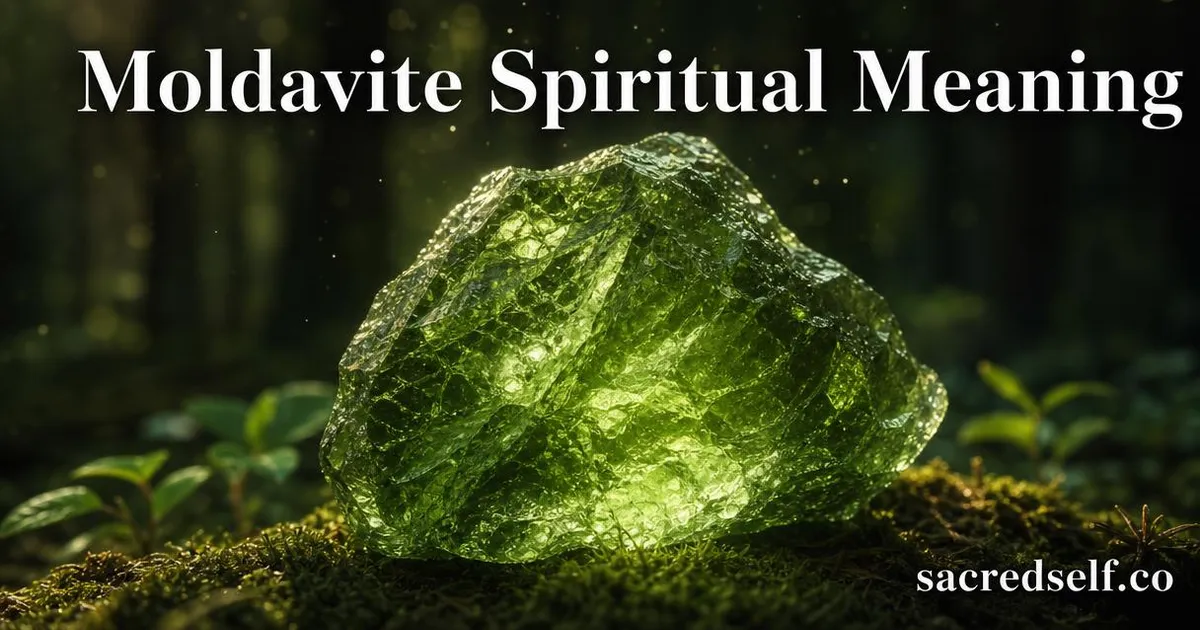
Moldavite is a forest green, glassy tektite formed when a meteorite struck the earth millions of years ago, and its wrinkled, pitted surface makes it look unlike any crystal you’d pull out of a mine. People are drawn to it for its fast, noticeable shifts, which can be exciting and sometimes unsettling.
If you’re in the middle of a major transition, just starting a spiritual practice, or you keep noticing this stone without knowing why, you’re exactly the kind of person who tends to feel pulled toward it.
Key Takeaways
- Moldavite is linked to transformation: people commonly report sudden life changes, relationship shifts, or new directions after working with it.
- It is connected to the heart chakra and to sharpening intuition and spiritual awareness in practice.
- Fakes are extremely common: most green glass sold as moldavite online is not genuine, so knowing how to spot the difference matters before buying.
- It can discolor with improper cleaning, so water and harsh chemicals should be avoided.
- Some people find its intensity overwhelming and benefit from starting with short sessions rather than wearing it all day.
🔮 Our readers’ favorites on Amazon: Best Tibetan Rings
6 Spiritual Meanings of Moldavite
These six meanings come up most often when people describe what happens after they start working with moldavite.
1. Transformation and Life Change
Moldavite is believed to accelerate change that is already waiting to happen, particularly during crossroads like a career shift, a relationship ending, or a relocation. People often describe sudden shifts in their circumstances after they start working with it.
Say you’ve been thinking about leaving your job for months but keep talking yourself out of it. Hold moldavite while you journal about a decision you’ve been avoiding and notice what surfaces on the page.
2. Spiritual Expansion and Awakening
This stone is associated with opening your awareness to spiritual experiences beyond everyday life, especially if you’re just beginning to explore that side of yourself. People connect it to expanded awareness, noticing things you might have been overlooking.
Think about a time when something you read or heard shifted your perspective on a situation you thought you understood. What belief about yourself or the world are you ready to look at differently?
3. Emotional Healing
Moldavite is used to help process grief and stored pain in crystal traditions, including feelings you’ve suppressed for a long time. People who work with it often describe old emotions coming up, sometimes unexpectedly, as the stone is believed to help move what has been stuck.
Say there’s a loss you haven’t fully let yourself feel because life kept moving. Place moldavite over your chest during a quiet moment and use it as a deliberate check-in with how you’re actually feeling.
4. Breaking Through Feeling Stuck
Moldavite is believed to dissolve inertia and push things forward for people who want change but can’t seem to move. It comes up often for people who feel trapped in a situation you know you need to leave but keep staying in.
You know the feeling: you keep saying this year will be the year you move, or switch careers, or end a relationship that ended emotionally a long time ago. What one step have you been putting off that you already know you need to take?
5. Deepening Meditation and Inner Clarity
People use it for sharper focus during meditation and clearer access to intuition, particularly for people whose minds wander or who feel disconnected during practice. Some people say it helps calm the thoughts that keep interrupting so they can actually settle in.
Maybe you sit down to meditate and your mind fills with your grocery list and a conversation from yesterday. Hold a small piece in your left hand at the start of a session and set one clear intention before you begin.
6. Luck, Synchronicity, and Meaningful Coincidences
Some traditions associate moldavite with meaningful coincidences, like the right person appearing at the right time or an opportunity arriving when you least expected it. People who work with it often describe a string of events that feel too well timed to be random.
Maybe someone mentioned a book to you the same day you were thinking about a problem it addresses, or you ran into someone you needed to talk to at exactly the right moment. Looking at the past few weeks, have you noticed any patterns or timing that felt more than accidental?
What Moldavite Is and Where It Comes From
Moldavite is a tektite, which means it formed from material ejected when a meteorite struck the earth’s surface. Most crystals are mined from the earth or formed through volcanic activity, but moldavite is the product of a meteorite impact. A meteorite struck what is now central Europe roughly 15 million years ago, and the heat and pressure fused sand and soil into glass that landed across what is now the Czech Republic. That origin is why moldavite looks so different from most stones: it’s forest green, glassy, and usually has a wrinkled or pitted surface that comes from how it cooled as it fell back to earth.
The color and clarity can vary between pieces, ranging from deep olive to a lighter, more translucent green. Genuine moldavite comes almost entirely from one region in the Czech Republic, which is why it’s considered rare and why the price reflects that scarcity. That rarity is also why fakes are so widespread: green glass can look similar enough to fool someone who’s never handled the real thing, and the demand far exceeds the supply.
You might also come across references to black moldavite or other dark tektites in your searches. Black tektites, like those found in Tibet or other impact sites, do exist and are sometimes compared to moldavite, but they are different stones with their own origins. Moldavite itself is always green. The dark versions people search for are usually indochinite or other tektite varieties, not moldavite.
🦋 You might also enjoy reading about: Crystals For Positive Energy
Moldavite Chakra and Zodiac Connections
Moldavite is most often linked to the heart chakra, known in Sanskrit as Anahata. In practical terms, that connection means people use it when they want to work on matters of the heart: opening up emotionally, processing relationship feelings, or working on something that feels shut down. The heart chakra association is why moldavite comes up so often in emotional healing work and in practices focused on compassion and self-acceptance.
For zodiac signs, moldavite is most often linked to Leo and Scorpio in practice. Leo is a fire sign associated with the heart and with personal expression, which mirrors the heart chakra connection. Scorpio is a water sign associated with transformation and intensity, which fits moldavite’s reputation for pushing change.
Some sources also connect it to Aquarius, an air sign, for its association with spiritual awakening and expanded awareness. Different traditions offer different pairings, so these aren’t hard rules but rather the associations you’ll see most often.
How to Use Moldavite
How you use moldavite depends on how sensitive you are to its effects. The most common methods are wearing it, holding it, or placing it where you practice.
- Wear it as a necklace or ring for ongoing contact.
- Hold it during meditation to sharpen focus and anchor an intention.
- Place it on an altar or beside your journal during reflective practice.
- Pair it with grounding stones like obsidian or black tourmaline to balance its intensity.
Some people find wearing it all day overstimulating, so start with a few hours and see how you feel. For cleansing and charging, moldavite responds well to moonlight, sound, or holding it with intention. Avoid water, salt, and harsh chemicals, as these can affect its surface and color over time. Crystals support wellbeing practices and don’t replace medical care.
🦋 Readers often explore this next: Symbols Of Balance And Harmony
Moldavite Side Effects and Intense Experiences
When some people first hold moldavite, they report a sensation crystal communities call the moldavite flush: warmth, tingling, or a feeling of lightheadedness that can come on quickly. Not everyone experiences it, and it isn’t something the stone does to you in any measurable sense, but it comes up enough in discussions that it’s worth knowing about. Spiritual practices and crystals don’t replace medical care, so if you experience physical symptoms that concern you, check with a doctor.
If you find the sensation overwhelming, start with sessions of five or ten minutes and see how you feel afterward. Some people can wear it all day without issue, and others need to set it down after a few minutes. Signs that you might want to set it aside for a while include feeling anxious, restless, or emotionally flooded after holding it. Taking a break is a normal part of working with an intense stone.
Is Moldavite Safe? Water, Handling, and Elixirs
Moldavite should not be placed in water for cleaning or for making crystal elixirs. It’s a form of natural glass, and prolonged exposure to water can cause surface changes, discoloration, or small cracks over time. That matters if you’re thinking about water-based elixirs or just want to rinse it off: a dry cloth or a soft brush is the safer way to clean it.
For storage, keep it away from other stones that could scratch it, and avoid leaving it in direct sunlight for long periods, as heat can affect the surface over time. A soft pouch or a lined box works well. Proper care keeps the surface and color intact so it stays the way it looked when you first picked it up.
Real vs Fake Moldavite: How to Tell
The market for moldavite is flooded with fakes, and the main reason is simple: genuine moldavite comes from a limited area in the Czech Republic, but demand is worldwide and growing. Green glass is cheap to produce and can look similar enough to fool someone who’s never handled real moldavite, so imitations are everywhere online.
Genuine moldavite has a few characteristics that set it apart. It has a wrinkled, sculpted surface that looks almost organic, like the texture of a leaf or bark. That texture is hard to replicate in manufactured glass, which tends to be smooth or have uniform bubbles.
Real moldavite is never perfectly clear, and its green color has a depth that plain green glass lacks. When you hold it up to light, genuine moldavite shows a green that shifts slightly, while fakes often look flat or unnaturally bright. The texture is the most reliable sign: if it feels smooth like a tumbled stone, it’s probably not real.
When buying, ask the seller where the piece came from, whether they have any documentation, and if it comes with a certificate of authenticity. Look for sellers who specialize in tektites or who source directly from the Czech Republic. A price well below the typical range for genuine moldavite is a warning sign.
FAQs About Moldavite
What zodiac signs are most drawn to moldavite?
Moldavite is most often linked to Leo, Scorpio, and Aquarius in crystal traditions. Leo connects to the heart and personal expression, Scorpio to transformation, and Aquarius to spiritual awakening. Different sources give different pairings, so these are the most common ones rather than fixed rules.
Why is moldavite so expensive?
Moldavite is expensive because it is rare and comes from a single region in the Czech Republic. The supply is limited, which keeps prices high and also keeps the market for fakes going.
What happens when you first start wearing moldavite?
Some people report warmth or tingling when they first hold moldavite, a sensation known in crystal communities as the moldavite flush. Others feel nothing at all. If it feels overwhelming, start with short sessions and see how you respond.
Is it okay to sleep with moldavite?
Some people sleep with moldavite nearby, but others find it too intense and experience vivid dreams or restless sleep. If you want to try it, start with one night and see how you feel in the morning before making it a habit.
How do you activate moldavite?
No formal activation is required, but people who work with crystals often hold the stone, set an intention for what they want from it, and spend a few quiet minutes with it before using it in practice.
Should you wear moldavite on your left or right hand?
Crystal traditions associate the left hand with receiving and the right with giving, so wearing it on the left is thought to help you absorb its effects, while the right is for projecting outward. There’s no evidence-based rule, so choose what feels right to you.
Is moldavite illegal anywhere?
Moldavite is not broadly illegal to own, buy, or sell in most countries. If you’re purchasing large quantities or importing from the Czech Republic, check local regulations to be sure.
Final Thoughts
Moldavite has an unusual reputation among crystals, and much of it comes from genuine accounts of how disruptive change can feel when it finally arrives. Working with it slowly and intentionally is the common thread across most practical advice about it.
If moldavite is said to bring what you’re already ready for, what do you think you might actually be ready for right now?
Share your thoughts in the comments below.
Namaste. 🙏