

Waking up with tears on your face – or realizing mid-dream that you were crying – is disorienting. It can feel heavy, confusing, even a little alarming. You weren’t consciously sad, but your body responded as if something real happened.
Many people experience this, and searching for meaning is a natural response. This article explores what crying in your sleep might mean spiritually, emotionally, and symbolically. It doesn’t offer a definitive answer, but perspectives worth exploring.
What resonates depends on your life circumstances. The same dream carries different weight depending on what you’re processing, who appeared, and how it felt upon waking.
What This Often Means (Key Takeaways)
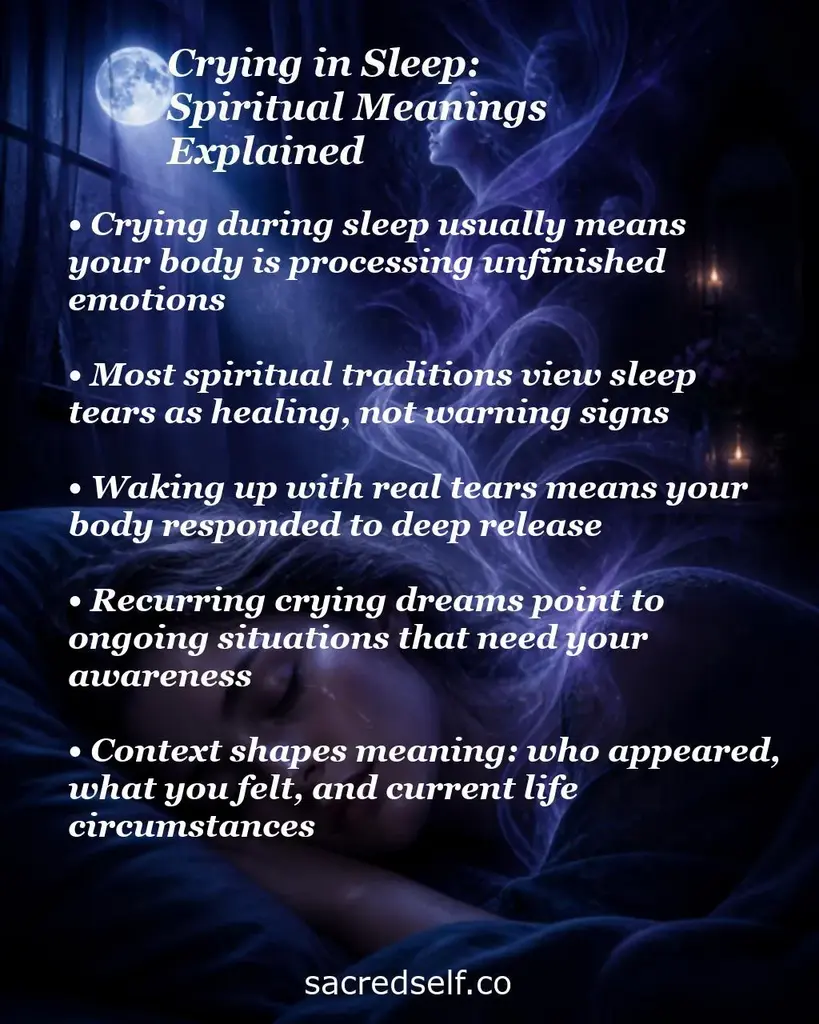
- Crying in sleep is often tied to emotional processing your waking mind hasn’t finished
- Spiritually, it can signal release, healing, or a transition happening beneath the surface
- It’s rarely a bad omen – most traditions view it as movement, not warning
- Context matters: who you saw, what you felt, and what’s happening in your life shape the meaning
- Waking up with actual tears adds another layer – your body was physically responding to something
- Recurring crying dreams usually point to something ongoing that needs attention
🌿 Top picks on Amazon: Best Spiritual Gifts For Dad
8 Spiritual Meanings of Crying in Your Sleep
These interpretations often overlap. Consider your emotional state, life events, and dream details.
1. Emotional Release Your Waking Life Hasn’t Allowed
The sleeping mind processes emotions that didn’t find space during the day – grief, frustration, longing, anger. When you’ve been holding it together for a long stretch, release comes when your guard is down.
This is common during stress, emotional suppression, or when you’ve managed others’ needs over your own.
Reflection: What feelings have you been pushing aside? What haven’t you let yourself fully feel?
Practical step: Create a small outlet – journaling, a trusted conversation, or allowing yourself to cry while awake. The dream may be showing what needs space.
2. A Sign of Inner Healing in Progress
Many spiritual frameworks link tears to cleansing, not just sadness but spirit moving through something. Crying – even in sleep – can be part of healing.
This applies after loss, difficult periods, or major life changes. Healing isn’t always linear or peaceful.
Reflection: Are you recovering from something? Healing can come in waves.
Practical step: Notice if the crying felt relieving or agonizing. Relief often points to healing. Waking up feeling lighter matters.
3. Unresolved Grief Surfacing
Grief – for a person, relationship, or lost version of self – unfinished in waking life, can emerge in dreams. The tears are psyche finishing what consciousness hasn’t.
This often appears around anniversaries, transitions, or when someone from your past appears. Grief doesn’t need to be fresh.
Reflection: Is there a loss you haven’t fully acknowledged?
Practical step: If a person or situation stands out, pay attention. Not a haunting, but emotional business to address.
4. A Response to Feeling Unseen or Unheard
Crying in dreams can reflect a deep need for connection or validation. Tears show what hasn’t been expressed or acknowledged.
This often shows during loneliness or when you feel overlooked at work or in relationships.
Reflection: Where do you feel your voice isn’t heard? Who do you long to be seen by?
Practical step: Review your relationships. Are important conversations being avoided? The dream might highlight what you already sense but aren’t acting on.
5. Processing Fear or Anxiety Below the Surface
Not all sleep crying comes from sadness – fear and anxiety can cause it as well. Dreams externalize worries your conscious mind manages.
This is common during uncertainty, life changes, or anticipatory stress. Fear may not feel rational but impacts your nervous system.
Reflection: What’s your biggest unspoken anxiety currently?
Practical step: If fear-based dreams recur, try grounding before bed – breathwork, cutting screen time, writing worries down – to reduce intensity.
6. Spiritual Sensitivity and Empathy Overflow
Some traditions say highly empathic or spiritually attuned people absorb others’ emotional energy. Sleep cries may be processing that energy.
Caregivers, healers, and emotionally demanding roles experience this often.
Reflection: Have you carried someone else’s emotional burden? Whose stress or sadness have you held?
Practical step: Practice energetic boundaries. Be intentional about what you absorb versus witness.
7. A Transition or Major Life Change Being Integrated
Dream tears during change symbolize the letting go transformation requires. Endings and beginnings coexist emotionally; crying shows grief in growth.
Applies during career shifts, moving, aging, parenthood – any threshold moment. Even welcomed change involves loss.
Reflection: What chapter is closing while a new one opens?
Practical step: Name what you’re leaving behind. Acknowledging the ending eases emotional charge in dreams.
8. A Connection to Someone Who Has Passed
Across many traditions, dreaming of deceased loved ones with strong emotions means meaningful contact or ongoing connection. Tears may belong to you, them, or both.
If a deceased person appeared or the loss related to death was vivid, these dreams carry significance.
Reflection: Who was in the dream? Did the emotions feel sad, comforting, or unresolved?
Practical step: Writing an unsent letter to someone lost helps process the dream’s emotional content.
How Context Changes the Meaning
Details shape the meaning of crying dreams. Apply interpretations aligned with your specific experience.
Crying in a Dream Because of Death
Dreams with death – yours or others’ – heighten emotional intensity. Spiritually, these symbolize endings, grief, or fear of loss rather than literal death.
Were you crying over someone who’s alive? It may reflect fear of losing them.
If a deceased loved one appeared and you cried, many traditions see this as part of grief or offering closure.
Seeing Someone Else Crying in a Dream
This can reflect projected emotions – you feel what they feel – or concern and guilt toward them.
Is the person struggling or does their pain feel like your own? Sometimes, grief is placed on them to process your own.
If you’ve hurt or lost contact with them, regret or unfinished business may surface.
Crying and Waking Up With Real Tears
When your body responds physically, the emotional processing was deep. Tears crossing from dream to waking show something significant being expressed.
This can feel disorienting but isn’t alarming.
Your first waking thought often reveals what the dream addressed.
Recurring Crying Dreams
Repeated crying dreams point to ongoing issues – unresolved emotions, patterns, or unchanging situations.
Notice who appears, what triggers tears, and your feelings on waking. The psyche signals this matters.
If distressing or hurting your sleep quality, address the root cause, not just the dreams.
🦋 Readers often explore this next: Spiritual Meaning Of Crying In A Dream
Cultural and Spiritual Perspectives on Crying in Dreams
These lenses offer ways to understand the experience, not fixed meanings.
Biblical Meaning of Crying in a Dream
The Bible highlights tears as significant. Psalm 56:8 says God collects every tear. Revelation 21:4 shows wiping tears as part of restoration.
Joel 2:28 calls dreams spiritually meaningful; crying in them can be a form of spiritual communication.
Some Christian views see these tears as the Holy Spirit surfacing deep intercession or prayer, especially in Pentecostal and charismatic traditions.
This interpretation fits within Christianity, not universally.
Psychological Lens (Carl Jung and Dream Work)
Jung saw dreams as unconscious revealing resisted conscious material. Crying in dreams releases unintegrated emotions.
The “shadow self” – parts suppressed – surfacing through tears points to what you avoid while awake.
This is not mystical: even psychological views find real meaning in these dreams.
Ignoring the unconscious invites stronger expression; crying is an invitation to listen.
General Spiritual Traditions and Tears as Cleansing
Many traditions, like Sufi mysticism, certain Buddhist teachings, and indigenous cultures, see tears as spiritual movement, not weakness.
In Sufi thought, tears are the heart’s language, a form of prayer enacted without the mind’s involvement.
Indigenous perspectives see tears as spiritual release, returning emotional energy to the earth.
What Should I Do After a Dream Like This?
Don’t rush to interpret or fix it. Sit with the feeling first.
Reflect on What the Dream Brought Up
Ask yourself: what was the emotional texture? Who was there? What were you crying about, if you know?
Write it down before it fades – even fragments clarify confusion.
Don’t force meaning. Sometimes the dream just needs to be witnessed.
Look at What’s Happening in Your Waking Life
Dreams don’t exist in a vacuum. Look for parallels.
Are you in a difficult relationship? Grieving? Under pressure? The dream may reflect what you haven’t faced fully.
Sometimes the dream points to what’s already in front of you rather than hidden symbolism.
Practical Steps If the Dreams Are Frequent or Distressing
Try grounding before bed: breathwork, cutting stimulating content, writing down worries.
The goal isn’t to stop dreams but to settle your nervous system.
If stress or anxiety is constant, address it directly – the dreams point to something needing attention.
If recurring crying dreams link to depression or trauma, see a therapist. It’s a practical tool, not a last resort.
🦋 You might also enjoy reading about: Get Out Of Mental Slump
Frequently Asked Questions
What does it mean when you cry in your sleep?
This question often comes from confusion or concern. Spiritually, crying in sleep often signals emotional processing, release, or healing beneath the surface. Psychologically, it’s your unconscious handling feelings your waking mind hasn’t completed, like grief, fear, or suppressed emotion.
It’s rarely a bad sign. Most traditions view it as movement, not warning. The meaning depends on your waking life and what the dream showed.
What does it mean when you cry in your dream and wake up crying?
Waking with real tears shows the emotion was strong enough to cross into your body. It highlights something significant the dream brought up.
It’s not alarming but deserves attention. Notice your feelings in the dream and your first waking thought – that’s often the clearest clue.
What does the Bible say about crying in your sleep?
The Bible sees tears as spiritually important. Psalm 56:8 says God collects each tear. Revelation 21:4 frames wiping tears as part of restoration. Joel 2:28 speaks to dreams’ spiritual meaning.
Some Christians view crying dreams as the Holy Spirit surfacing deep intercession, especially in Pentecostal and charismatic traditions.
Is the Holy Spirit making me cry?
This is a real question among people of faith. Pentecostal and charismatic Christians often interpret emotional sleep responses as the Spirit’s presence.
If this fits your faith, it’s a meaningful idea. Tears may be spiritual communication or release you didn’t consciously start.
Is crying in your sleep a sign of depression?
Occasional crying dreams alone don’t indicate depression. Many experience them during stress, grief, or change without depression.
However, if they’re frequent and paired with persistent low mood, fatigue, hopelessness, or loss of interest, that pattern deserves professional discussion. The dreams may point to something needing support.
Is it good or bad to cry in dreams?
Most views see it as neither good nor bad – it’s movement, not judgment. Meaning depends more on context, feelings, and your life situation than crying itself.
Many traditions see tears as cleansing. Psychologically, tears reveal unconscious processing. It’s information, not a verdict.
Why does this dream feel so vivid and real?
REM sleep produces the most emotionally intense dreams. When feelings run high, dreams become vivid.
Spiritually, some traditions hold vivid emotional dreams carry stronger messages. Without that lens, vividness shows how real the emotions are to you – that’s important.
How can I better understand what this dream meant?
Journal right after waking – capture feelings before memories fade. Write who was there and how you felt both in the dream and on waking.
Look for parallels in life instead of one “correct” meaning. Think about what you were focused on before bed or unresolved relationships.
Sometimes meaning becomes clear days later when waking life echoes the dream.
Final Thoughts
Crying in your sleep – whether grief, release, or fear – is your inner world asking for attention. That deserves your notice.
There’s no one right interpretation. What matters is what feels true for where you are now.
What did the dream bring up that you haven’t faced? Is there someone or something this experience points you toward?
If this article resonated or you’ve had a similar experience, share it below. Your story – what you dreamed and how it felt – might be exactly what someone else needs.
Namaste. 🙏
🦋 You may also find insight in: Spiritual Meaning When Everything Goes Wrong