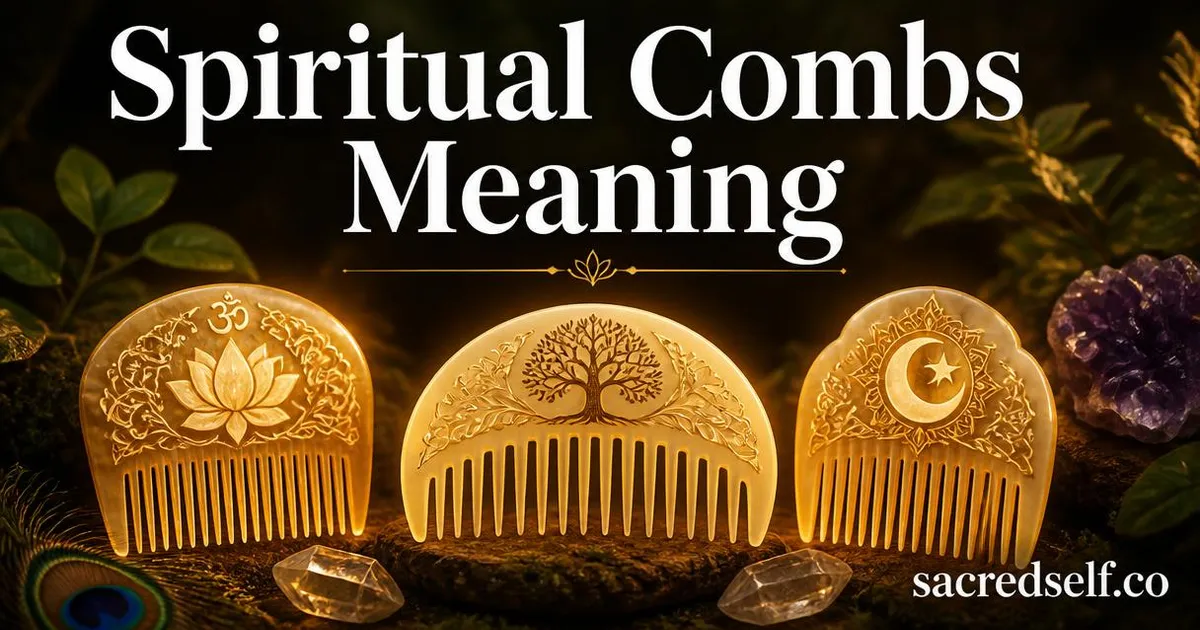
A comb seems ordinary until you hold one carved from sandalwood, its scent rising as your fingers trace symbols of lotus or phoenix. Suddenly, this grooming tool feels different: weighted with intention, connected to something larger than daily routine.
Some combs are crafted to be more than functional. Made from sacred woods, carved with spiritual symbols, and used with mindfulness, they transform an everyday act into a moment of presence and self-care.
Key Takeaways
- Spiritual combs are made from natural materials like sandalwood, boxwood, or red sandalwood, chosen for their energetic properties and symbolic significance
- They represent clarity, order, protection, and the untangling of mental and emotional knots
- Different cultures use combs as protective talismans, meditation tools, and symbols of intentional self-care
- Carved symbols like lotus, phoenix, or fox add layers of meaning related to transformation and spiritual growth
- Using a spiritual comb turns daily grooming into a mindfulness practice that connects physical care with inner reflection
🦋 This might also resonate with you: Does Hair Carry Energy
What Makes a Comb “Spiritual”?
Material separates a spiritual comb from a plastic drugstore version. Natural woods carry properties that matter: sandalwood soothes and calms, boxwood purifies, red sandalwood grounds and warms.
Craftsmanship shifts the object’s purpose. Hand-carved combs made with attention feel different in your hand than mass-produced ones. The maker’s focus during creation becomes part of what you hold.
Symbolic elements add meaning. A lotus carved into the handle represents spiritual awakening. A phoenix speaks to transformation. These aren’t decorative – they’re visual reminders of what the comb represents when you use it.
Context determines whether a comb is spiritual. The same wooden comb might sit on a meditation altar, be used during a morning centering ritual, or groom your hair. The difference is your intention and awareness while using it.
The shift from functional to meaningful happens when you slow down enough to notice.
6 Spiritual Meanings of Combs
Combs carry layered symbolism across spiritual traditions. Here’s what they represent and when each meaning might speak to your current experience.
1. Clarity and Mental Untangling
A comb moves through knots and snarls, separating what’s tangled into smooth strands. This mirrors the process of clearing mental clutter: sorting through racing thoughts, untangling confusion, finding a clearer path forward.
This meaning shows up during periods of overthinking, when you’re stuck in decision loops, or when your mind feels crowded with worries that won’t settle.
Ask yourself: What thoughts feel knotted right now? What would mental clarity actually look like for you?
Try this: Use your morning combing as a mindfulness anchor. With each stroke, release one racing thought. Notice the physical sensation of smoothing and let it mirror the mental clearing you’re seeking.
2. Protection and Energetic Boundaries
Many traditions view combs as protective objects that ward off negative energy and create boundaries. In some cultures, people place combs under pillows to protect their dreams or carry small combs as talismans against harmful influences.
This symbolism matters when you feel energetically porous – absorbing others’ emotions, feeling drained by certain people or spaces, or struggling to maintain your own center in overwhelming environments.
Reflect on where you need better boundaries. Which relationships or situations leave you depleted? What would a clear energetic boundary feel like?
Try this: Keep a spiritual comb in your personal space – your bedside table, meditation corner, or desk drawer. Let it be a physical reminder that you have the right and ability to protect your energy.
3. Self-Care as Sacred Practice
When you comb your hair with full attention – noticing the sensation on your scalp, the rhythm of your movement, the feeling of caring for yourself – grooming becomes ritual. This isn’t about achieving perfect hair. It’s about being present with your body.
This meaning speaks to moments when self-care feels rushed or neglected, when you’re going through motions without truly inhabiting them, or when you’re seeking more presence in daily routines.
Ask yourself: How often do you actually slow down for yourself? What does genuinely honoring your body look like, beyond checking tasks off a list?
Try this: Set a timer for five minutes. Comb your hair deliberately, breathing deeply, noticing every sensation. This isn’t multitasking time – just you, your breath, and the act of care.
4. Order and Harmony
Smooth, aligned strands represent a balanced life. The act of creating external order – untangling, smoothing, arranging – can reflect and encourage inner harmony. When your outer world feels chaotic, small acts of ordering create pockets of calm.
This symbolism emerges during chaotic periods, major transitions, or when you’re craving more structure and peace but don’t know where to start.
Consider what areas of your life feel disordered right now. What small act of ordering might bring a sense of calm, even if the larger chaos remains?
5. Connection to Nature and Grounding
Holding a comb carved from sandalwood or boxwood connects you to earth elements. The wood’s weight, its grain under your fingers, the natural scent it releases – these sensory details anchor you in the physical world when your mind spins into abstraction.
This meaning matters when you feel disconnected from your body, overly mental, caught in anxiety loops, or spiritually ungrounded.
Reflect on when you feel most connected to the natural world. How can you bring more of that embodied presence into daily life?
6. Transformation and Renewal
Combs carved with phoenix or lotus symbols represent rebirth and spiritual growth. The phoenix rises from ashes; the lotus blooms from mud. Both speak to beauty and strength emerging from difficulty.
Grooming itself can symbolize preparation – readying yourself for a new phase, shedding an old identity, consciously stepping into change.
This resonates during transitions, after difficult periods when you’re emerging changed, or when you’re actively choosing personal growth over staying comfortable.
Ask yourself: What old version of yourself are you ready to release? What’s emerging in its place?
Origins and Cultural Significance of Spiritual Combs
Understanding where spiritual combs come from adds depth to their modern use. These aren’t new-age inventions – they’re rooted in ancient wellness and spiritual practices.
Development in Ancient India
Wooden combs appear in early Ayurvedic traditions, where scalp health connected directly to energy flow through the crown chakra. Practitioners chose specific woods for their properties – some cooling, some warming – to balance the body’s internal heat.
Combs served a practical purpose: distributing natural oils from scalp to hair, stimulating blood flow, maintaining balance. But the choice of sacred woods like sandalwood and neem elevated them beyond tools.
The Ayurvedic approach viewed grooming as health maintenance, not vanity. Caring for your hair meant caring for your entire system.
Spread Across Asia
As Buddhism spread across Asia, meditation practices incorporated various physical tools and rituals. Combs found their place in preparation routines – centering the practitioner before sitting.
In Japan, boxwood combs (tsuge櫛) became cultural treasures, prized for their smooth teeth and durability. Japanese artisans developed intricate carving techniques, turning functional objects into art.
Chinese traditions embraced carved combs as both practical items and symbolic gifts. Different regions preferred different materials and designs. Elaborate combs with carved scenes became status symbols, but simpler versions served spiritual purposes.
The craftsmanship itself mattered – creating beauty with focus and skill was considered a spiritual practice.
Symbolic Carvings and Their Meanings
The symbols carved into spiritual combs aren’t random decoration. Each carries specific meaning:
Phoenix: transformation, rebirth, rising from difficulty with renewed strength
Fox: wisdom, adaptability, spiritual cunning and the ability to navigate between worlds
Lotus: purity, spiritual awakening, rising above circumstances without being stained by them
These carvings enhance the comb’s spiritual function. Holding a phoenix comb during a major life transition reinforces your intention to emerge transformed. A lotus comb reminds you that growth often happens in muddy circumstances.
Choose symbols that align with where you are now, not where you think you should be.
🦋 You may also find insight in: Remedies For Blocked Chakras
Spiritual Combs in Dreams
Dreaming about combs often points to themes of clarity, order, and self-care in your waking life. Here’s how to interpret common comb dreams.
Finding or receiving a comb in a dream suggests you’re being offered tools for clarity or an invitation to care for yourself better. Pay attention to who gives you the comb – that person might represent an aspect of yourself or a quality you need to embrace.
A broken comb signals disrupted order or neglected areas of your life. Something that usually helps you maintain balance isn’t working. The dream asks you to address what you’ve been avoiding.
Combing someone else’s hair often reflects a desire to help others find clarity, peace, or order. It can also reveal codependent patterns – are you trying to fix someone else’s tangles instead of addressing your own?
Losing a comb points to feeling disconnected from self-care routines or spiritual practices that once grounded you. You’ve misplaced something that helped you maintain your center.
Context matters more than universal symbols. How did you feel in the dream? What’s happening in your waking life that might connect to themes of order, clarity, or self-care?
Dreams reflect your inner landscape. They don’t predict the future or deliver cosmic messages – they show you what your subconscious is processing.
Materials and Their Spiritual Properties
The wood your comb is made from carries specific properties that affect how it feels to use and what energy it brings to your practice.
Sandalwood (Green and Red)
Green sandalwood offers cooling, calming energy. It’s recommended for reducing stress and anxiety, soothing an overactive mind, and bringing a sense of peace. The natural fragrance works as aromatherapy – each time you comb, you breathe in that calming scent.
Small leaf red sandalwood brings warming, grounding energy. It’s said to promote circulation and vitality, making it useful when you feel depleted or disconnected from your body.
Both types are prized in spiritual practice, but they work differently. Notice which quality you need – cooling calm or warming vitality.
Ethical sourcing matters. Sandalwood is often overharvested. If you choose a sandalwood comb, research where it comes from and whether it’s sustainably sourced.
Boxwood
Japanese boxwood is especially valued for its fine, smooth teeth and exceptional durability. It’s hard enough to hold intricate carving but gentle on hair and scalp.
Boxwood carries neutral energy, making it suitable for daily mindful use without specific energetic intention. It won’t heat or cool – it is what it is.
Traditional Japanese craftsmen use methods passed down through generations to create boxwood combs. The time and skill involved in making them adds meaning to owning and using one.
Other Sacred Materials
Bamboo represents flexibility, resilience, and growth. Bamboo combs are lightweight and sustainable, often chosen by people prioritizing environmental consciousness in their spiritual practice.
Neem has purification and cleansing properties in Ayurvedic tradition. Neem combs are said to ward off scalp issues while also clearing stagnant energy.
Some traditional practices use horn or bone, though these are less common now. These materials connect to animal wisdom and the cycle of life and death.
Choose based on what resonates with your values and needs. The material that feels right to you is the right material.
Using Spiritual Combs in Modern Practice
Ancient tools can fit into contemporary life. Here’s how people integrate spiritual combs into modern spiritual practice.
Integration in Meditation Spaces
Some practitioners place combs on altars as objects representing self-care, order, or transformation. The comb becomes a visual reminder of your commitment to both inner and outer harmony.
Pre-meditation grooming serves as a centering ritual. Just as you might light incense or arrange cushions, combing your hair with intention signals to your mind and body that you’re transitioning into practice.
Physical preparation supports mental preparation. When you care for your appearance before sitting, you’re honoring the practice and yourself.
Create your own ritual around combing. There’s no prescribed method – what matters is consistency and presence.
Daily Mindfulness Practice
Morning ritual: Use combing as intention-setting time. As you smooth your hair, mentally set your focus for the day. What quality do you want to embody? What do you want to remember?
Evening ritual: Release the day’s tangles. As you comb before bed, consciously let go of what you’re carrying from the day. Each stroke can represent releasing one thing that’s no longer yours to hold.
Breathwork while combing: Synchronize your strokes with your breath. Inhale as you lift the comb, exhale as you pull it through. This coordination brings you into your body and out of your head.
Ordinary moments become sacred when you bring full attention to them. You don’t need special circumstances – just presence.
Self-Care and Body Awareness
Using a comb with wider-spaced teeth for scalp massage creates acupressure effects. Moving the teeth across your scalp in small circles stimulates blood flow and can release tension you didn’t know you were holding.
Notice sensations as you comb. Is your scalp tender in some areas? Are you holding tension in your jaw or shoulders while grooming? These physical observations connect you to your body’s current state.
Hair and scalp health extend from overall well-being. When you care for this part of yourself with attention, you’re practicing awareness of your whole system.
The difference is in slowing down enough to notice what you’re doing.
🦋 Our readers also explored: Inner Work Exercises
What Should You Reflect On?
If you’re drawn to spiritual combs, spend time with these questions before rushing to purchase one or create elaborate rituals.
Questions to consider:
- What drew you to learn about spiritual combs? What were you actually hoping to understand or find?
- Does turning grooming into ritual appeal to you? Why or why not? Be honest – not every practice resonates with everyone.
- Which symbolic meaning resonates most with where you are right now? Clarity? Protection? Self-care? Transformation?
- What daily acts could become more intentional or meaningful without adding time or complexity?
- How do you currently practice self-care? Where could you add more presence without adding more tasks?
Practical steps:
- If purchasing a spiritual comb, hold different materials before choosing. Notice which feels right in your hand, which scent appeals to you, which weight feels comfortable.
- Start small. Dedicate one grooming session per week to mindful practice rather than trying to make every instance sacred.
- Notice when your mind wanders during grooming. This is normal and expected – it’s part of the practice, not a failure.
- Journal about what comes up during combing practice. You might be surprised what surfaces when you create space for attention.
- Let your use evolve naturally. Don’t force it into someone else’s ritual structure. Your practice should fit your life.
- If it doesn’t resonate after giving it a genuine try, move on. Not every spiritual tool works for everyone, and that’s completely fine.
Frequently Asked Questions
What is the spiritual meaning of combs?
Combs spiritually represent clarity, order, protection, and the untangling of both physical and mental knots. They symbolize self-care as a sacred act and can serve as tools for mindfulness, connecting the act of grooming with intention and presence. The meaning comes from how you use the comb, not just from owning one.
What do combs symbolize?
Combs symbolize bringing order to chaos, clearing confusion, setting boundaries, and caring for yourself with intention. In various spiritual traditions, they also represent protection from negative energy, preparation for transformation, and the harmony that comes from tending to both outer appearance and inner well-being. The act of untangling mirrors sorting through complicated thoughts or emotions.
What does a comb represent in dreams?
A comb in dreams often points to a need for clarity, self-care, or bringing order to some area of your life. Finding a comb might suggest you’re being offered tools for sorting through confusion. A broken comb could reflect neglected self-care or disrupted routines that usually help you maintain balance. The specific meaning depends on your emotions in the dream and what’s currently happening in your waking life.
What is the significance of a comb in spiritual practice?
In spiritual practice, combs made from sacred materials like sandalwood or boxwood transform routine grooming into mindful ritual. They’re used in meditation spaces to prepare for practice, carried as protective talismans, and employed as tools for connecting physical care with spiritual awareness. The significance comes from intentional use, not from the object itself. Any comb becomes spiritual when you use it with presence.
Are spiritual combs mentioned in the Bible?
Combs aren’t specifically highlighted as spiritual objects in the Bible, though grooming and presentation appear in various contexts – anointing with oil, washing feet, caring for one’s appearance. The concept of spiritual combs as sacred objects comes primarily from Eastern traditions, Ayurvedic practices, and Buddhist customs rather than biblical tradition. Different spiritual paths emphasize different tools.
What’s the difference between a spiritual comb and a regular comb?
The main differences are material (natural woods versus plastic), craftsmanship (hand-carved with intention versus mass-produced), design (may include spiritual symbols like lotus or phoenix), and use context (employed mindfully as ritual versus purely functional). That said, any comb can become spiritual if you use it with presence and intention. The object itself is less important than how you engage with it.
How do I choose a spiritual comb?
Choose based on what resonates: the material’s properties (sandalwood for calm, boxwood for balance, red sandalwood for grounding), carved symbols that align with your current path, and how it feels in your hand. Consider whether you’re drawn to its scent, weight, or appearance. Hold different combs if possible before deciding. Trust your intuition – the right comb will feel appropriate for your needs and budget.
Can I use a spiritual comb just for regular grooming?
Absolutely. A spiritual comb serves dual purposes – it’s still a functional grooming tool. The spiritual aspect comes from your intention and awareness, not from restricting when you can use it. Many people find that having a beautiful, natural comb makes daily grooming more pleasant and grounding, whether or not they’re consciously turning it into a ritual each time.
Final Thoughts
A comb can be just a comb. Or it can be a small daily reminder to slow down and care for yourself with presence. The difference isn’t in the object – it’s in the attention you bring.
Spiritual practice lives in how you show up, not in the tools you own. A hand-carved sandalwood comb used while scrolling your phone is just expensive grooming. A plastic comb used with full presence and intention becomes a meditation tool.
What might change if you approached one ordinary act tomorrow with more attention? What would it feel like to turn something you already do every day into a moment of genuine care for yourself?
If you have experience with spiritual combs or daily rituals that ground you, share in the comments. Your perspective might be exactly what someone else needs to hear.
Namaste. 🙏