
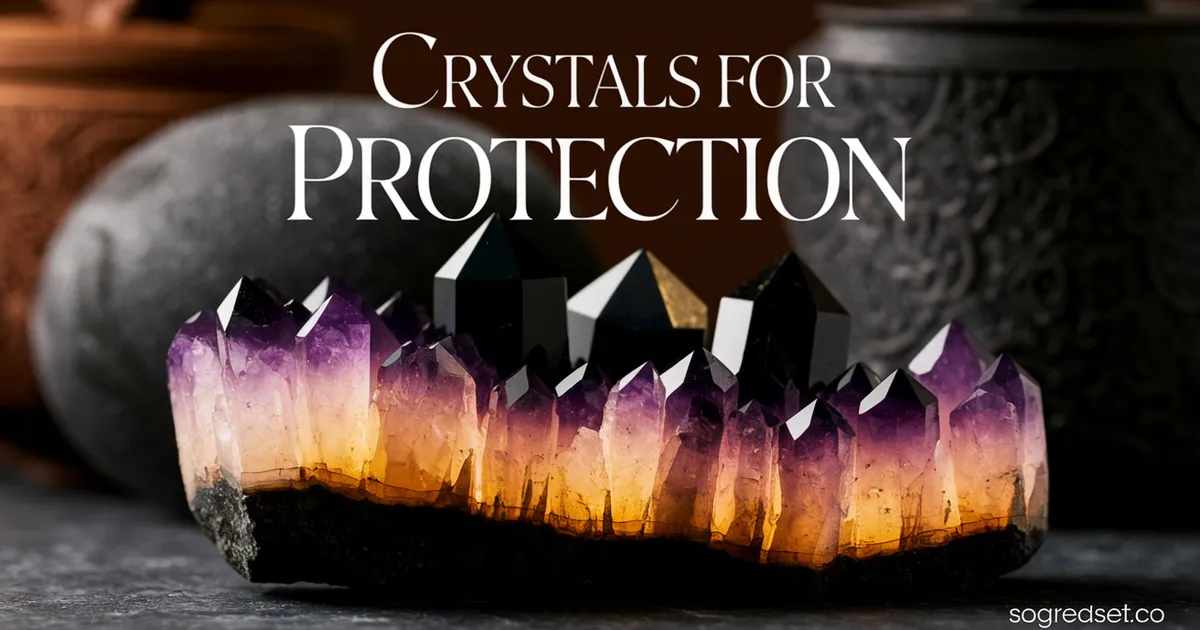
If you feel drained after certain conversations, anxious in specific rooms, or just want a simple way to stay grounded, crystals for protection are one of the most common tools people reach for. Think of them as a physical reminder of your intention. They support your awareness, and they are not a guaranteed shield.
This list covers 10 widely recommended stones, the specific situations each one suits, and simple ways to start using them. You can pick the one that matches what you are dealing with and go from there.
Key Takeaways
- Black Tourmaline is the most recommended stone for blocking negative energy across traditions.
- Black Obsidian clears deeply rooted negativity and suits people who absorb others’ moods easily.
- Placing crystals near doors and windows is one of the most common approaches for home protection.
- Crystals are a support tool, not a replacement for boundaries, rest, or professional care.
- Starting with one crystal and observing your experience over a few weeks is more grounding than collecting many at once.
🕯️ Top picks on Amazon: Best Spiritual Salt Pouch
How to Choose a Crystal for Protection
The best way to choose a protection stone is to match it to your situation. Think about whether you need something for everyday wear, a stone to place in your home, or something for emotional clearing after a hard week. A stone you carry through a crowded subway serves a different purpose than one sitting on your nightstand.
Color matters in traditional crystal practice. Black stones like tourmaline and obsidian are most often linked to absorbing or blocking negative energy. Lighter stones like amethyst and clear quartz are associated with clarity, calm, and amplifying intention. If you feel drawn to a particular color, that pull is worth paying attention to, even before you read about the stone’s properties.
Whether you wear, carry, or place a crystal changes the practical side but not the purpose. Wearing a stone keeps it close to you throughout the day.
Placing one at home creates a fixed point in a specific room. The intention you set matters more than how you carry it, so choose what fits your daily routine.
When you evaluate a stone, rely on your own experience over marketing claims. Hold it, sit with it for a few minutes, and notice whether you feel calmer, more settled, or nothing at all. A stone that does nothing for you on the shelf might still be the right one for someone else, and that is fine.
10 Crystals for Protection
These 10 stones appear repeatedly across crystal books, older traditions, and modern practice, each suited to a slightly different situation.
1. Black Tourmaline
Black Tourmaline is the most frequently recommended protection stone in both modern crystal practice and older folk traditions. It comes up consistently for blocking negative energy, and crystal healers associate it with the root chakra (Muladhara), which relates to safety and grounding.
Say you take a crowded bus to work every morning and arrive feeling wrung out before the day starts. You could hold a piece of Black Tourmaline in the hand you do not use for writing for a few minutes before that commute or before a difficult conversation, and see whether you arrive feeling more settled than usual.
2. Black Obsidian
Black Obsidian is linked to clearing deeply rooted negativity and shielding people who take on others’ feelings easily. In crystal practice, it is associated with the root chakra (Muladhara), and it is recommended most often for people who absorb others’ moods easily.
Think about the friend who calls you whenever she is upset and leaves you feeling emptied out afterward. Are there specific spaces or people that consistently leave you feeling that way, and would carrying a piece of obsidian in your pocket on those days change anything?
3. Smoky Quartz
Smoky Quartz is traditionally used to transmute negative energy. In crystal tradition, this means it clears negative energy and brings the space back to neutral. This makes it well suited for homes with ongoing tension, especially in shared rooms where multiple people spend time.
You could set a piece near your front door or on your workspace and notice whether the atmosphere in that room feels different after a week. If the tension in your living room after dinner has been a pattern, this is the stone to try there.
4. Amethyst
Amethyst is associated with calm and spiritual protection, especially in sleep environments and transitional spaces. Crystal healers connect it to the third eye chakra (Ajna) and the crown chakra (Sahasrara), and it is suggested frequently for people who experience anxious thoughts at night or feel unsettled after moving into a new home.
Picture yourself lying in bed while your mind races through tomorrow’s tasks the moment the lights go out. A piece of amethyst on your nightstand might be worth trying. Is the space where you sleep feeling restless or heavier than it used to?
5. Clear Quartz
Clear Quartz is used to amplify protective intentions and is often paired with darker stones to strengthen their effect. It is also a versatile starting point if you are unsure which stone fits your situation.
You might already have a piece of Black Tourmaline. Place a clear quartz crystal alongside it at a room entry point and treat the pair as one protective unit. This combination appears frequently in crystal references as a simple, effective setup for a doorway.
6. Shungite
Shungite is rooted in Russian folk tradition and is used in modern practice near technology sources and high screen environments. People who feel mental fatigue building after long hours at a desk often reach for this stone.
Your home office has two monitors and you notice the heaviness that builds after a full day at the screen. A piece of shungite near your keyboard is a common placement for that. Do you notice a particular heaviness after long hours at a desk or in front of a screen?
7. Labradorite
Labradorite is valued for strengthening personal boundaries and deflecting unwanted external influences. It is often worn by people in helping professions, such as caregivers, nurses, or counselors, who regularly absorb others’ emotional states.
Your job involves listening to people in distress all day, and you come home carrying everyone’s weight. Try wearing labradorite as a pendant or carrying it in your pocket on days involving emotionally demanding interactions.
8. Black Onyx
Black Onyx is traditionally associated with grounding and self-mastery during periods of stress, grief, or significant life change. It is a steady, stabilizing choice when daily life feels unpredictable or hard to manage.
You might be going through a transition like a divorce or a job loss, and everything feels uncertain. Black onyx is the stone people often recommend for that kind of instability. What area of your life feels most outside your control right now, and what would feeling grounded there look like?
9. Lapis Lazuli
Lapis Lazuli is linked to truth, clarity, and protection from deception in ancient Egyptian and Mesopotamian traditions. In crystal practice, it is associated with the throat chakra (Vishuddha), and it suits situations involving unclear communication, manipulation, or environments where honesty feels scarce.
Picture an office where people say one thing in meetings and another in the hallway. Lapis lazuli is the stone associated with cutting through that kind of fog. Place it on your desk or wear it during conversations where clarity and honesty matter most.
10. Black Kyanite
Black Kyanite is used to cut energetic cords and clear residual attachment from past relationships or unresolved situations. It is a less common choice but appears consistently in crystal references for people working through emotional separation or transition.
If a relationship ended months ago and you still think about that person more than you want to, black kyanite is the stone that comes up for that specific work. Is there a past situation or relationship that still occupies more mental space than you would like?
Crystals support wellbeing practices and do not replace medical care. If you are dealing with anxiety, grief, or emotional exhaustion that affects your daily life, a doctor or therapist can help in ways a stone cannot.
🦋 Our readers also explored: Crystals For Healing
How to Use Crystals for Protection
The way you use a crystal depends on whether you wear it, carry it, or place it in your home, though the core practice stays the same. Set an intention and let the stone anchor it.
When you use a protection crystal for the first time, hold it in both hands and say to yourself what you want it to do. Something simple like ‘I use this stone to stay grounded and clear in difficult spaces’ is enough. You do not need a ritual or special words, just a clear statement of purpose.
Placement matters depending on your goal. For a car, a small tumbled stone in the console or glove compartment is typical. For a desk, place the stone where you will see it during the day, not buried in a drawer. Near a front door, set the stone on a table or shelf close to the entry point.
Protection crystals work hard in traditional belief, so cleansing them regularly matters. Sunlight, moonlight, sound, and dry salt are all standard methods. Once a week or every two weeks is a reasonable rhythm, and you will start to feel when a stone needs it.
Where to Place Protection Crystals at Home
Entry points like doors and windows are the usual placement locations for protection stones. The idea is that energy enters through these openings, so placing a stone nearby creates a first point of contact.
Bedroom placements suit stones associated with calm and sleep, like amethyst. Stones linked to intense clearing, like black obsidian, are often kept in living areas or entryways instead of right next to the bed. Match the stone’s traditional association to the room’s purpose rather than putting every stone in one place.
Distributing stones across your home works better than clustering them in a single spot. A piece of black tourmaline near the front door, smoky quartz in the living room, and amethyst in the bedroom covers more ground than five stones piled on one shelf.
One caution: keep raw or fragile stones away from water sources and out of reach of small children. Some stones can chip, and a toddler who puts everything in their mouth should not have access to small crystals.
🦋 You may also find insight in: Unakite Spiritual Meaning And Benefits
FAQs About Crystals for Protection
These are the most asked questions about protection crystals.
Which crystal is best for protection from negative energy?
Black Tourmaline is the most consistently recommended stone for blocking negative energy. It appears in modern crystal books, older practices, and online recommendations more than any other stone for this purpose.
Which crystal should I wear for protection?
Black Tourmaline and labradorite are the two most often worn stones for protection. Black Tourmaline suits everyday situations like commutes and crowds, while labradorite is favored by people in helping professions who absorb others’ emotions.
Do protection crystals work differently at home vs. worn on the body?
Placed crystals create a consistent energy point in a specific room, while worn crystals move with you through different environments. The stone works the same way in both cases, but the area it covers changes.
How do you cleanse and recharge protection crystals?
Sunlight, moonlight, sound, and dry salt are standard methods for cleansing and recharging your crystals.
Which crystals should not be placed together?
There is no widely agreed rule against combining specific stones, though some practitioners keep stones with very different energies in separate rooms instead of side by side. Trust your own sense of what feels right in your space.
Is there a crystal that should not be kept in the bedroom?
Black obsidian is often kept outside the bedroom because of its association with deep clearing work. Some people find it too intense for sleep, while others have no issue with it.
What do religious traditions say about using crystals for protection?
Different traditions hold different views on crystals. Some Christian traditions associate stones with the gemstones in biblical high priest garments, Hindu traditions use specific gemstones in Jyotish astrology, and some secular perspectives view crystals as purely psychological anchors. None of these views are definitive.
Can crystals really keep negative people away?
Crystals cannot physically remove people from your life. What they can do is serve as a reminder of the boundaries you have set, which may change how you respond to difficult people and how much of their energy you take on.
Final Thoughts
A protection crystal works best when you choose it for a specific situation instead of picking one at random from a list. Start with one stone, use it consistently for a few weeks, and notice whether it shifts your awareness before adding more to your practice. What is one situation in your daily life where you most need to feel protected and grounded?
Share your thoughts in the comments below.
Namaste. 🙏