Cinnabar jewelry catches your eye because of that deep, saturated red: it’s unmistakable. But if you’re here, you’re probably wondering what it actually does, whether it’s safe, and if the cultural or spiritual claims hold weight.
Cinnabar has been valued in Chinese culture for thousands of years, linked to vitality, prosperity, and transformation. People wear it for confidence, manifestation, and grounding. But here’s the complication: cinnabar is mercury sulfide. That means understanding the benefits also requires understanding the risks.
This isn’t about miracle promises or fear. It’s about what cinnabar represents, how people use it, and what you need to know before deciding whether it’s right for you.
Key Takeaways
- Cinnabar has been used in Chinese culture for centuries, associated with vitality, prosperity, and spiritual transformation
- In metaphysical traditions, it’s connected to confidence, manifestation, grounding, and abundance
- The stone contains mercury sulfide – wearing sealed, polished cinnabar jewelry is generally considered safer than handling raw stone or powder
- Safety depends on the form: intact jewelry vs. damaged pieces, frequency of wear, and whether you’re sensitive or pregnant
- Benefits are subjective and symbolic – this is about personal meaning and cultural connection, not medical claims
- If you’re drawn to it, understanding both the symbolism and the practical considerations helps you make an informed choice
🦋 If this resonated, you might also like: Root Chakra Essential Oils
7 Benefits of Wearing Cinnabar
These benefits reflect traditional beliefs, metaphysical perspectives, and cultural symbolism. They’re not universal truths – they’re frameworks for reflection and intention.
1. Vitality and Life Force Energy
Traditional Chinese medicine and metaphysical communities associate cinnabar’s red color with blood, life force (qi/chi), and physical vitality. The color itself is tied to the pulse of living energy.
This applies if you’re recovering from burnout, feeling low energy, or wanting to reconnect with your body and physical presence.
Ask yourself: What would it mean to feel more energized? What small daily practices support your vitality beyond wearing a stone?
Pair wearing cinnabar (if you choose to) with grounding practices like moving your body, eating nourishing foods, or spending time outdoors. The stone becomes a reminder, not a replacement.
2. Confidence and Personal Power
Cinnabar is often linked to the root and sacral chakras in energy work – areas associated with security, courage, and self-assurance. The bold red color itself can serve as a visual anchor for confidence and presence.
Consider this during transitions, before important conversations, or when you’re reclaiming your sense of self.
Where in your life do you want to feel more certain or grounded? What internal shifts would support that?
Wear it as a reminder of your intentions, and notice when you feel most aligned with that energy – what were you doing or thinking?
3. Manifestation and Abundance
In feng shui and metaphysical use, cinnabar is considered a stone of wealth, prosperity, and drawing in opportunities. It’s not about magical thinking – it’s about focusing your attention on possibility and being open to what comes.
This matters if you’re setting goals, starting a new venture, or shifting your mindset around scarcity.
What does abundance mean to you beyond money? How do you recognize opportunities when they appear?
Use cinnabar as a tangible symbol while also taking concrete actions toward your goals – apply for opportunities, have conversations, make plans. The stone focuses your attention; you still need to move.
4. Spiritual Transformation and Alchemy
Cinnabar has a long history in Daoist alchemy and spiritual practice, symbolizing transformation and the pursuit of enlightenment. The stone itself is formed through geological transformation (mercury + sulfur), which mirrors inner change.
This helps during periods of self-examination, identity shifts, or when you’re actively working on personal growth.
What old patterns or beliefs are you ready to release? What version of yourself is emerging?
Journal about what transformation means to you right now – wearing cinnabar can be a physical reminder of your commitment to growth.
5. Protection and Grounding
Some traditions view cinnabar as a protective stone, helping to ward off negativity or psychic interference. It’s also associated with grounding energy, connecting you to the earth and physical reality.
This is meaningful if you’re feeling scattered, overwhelmed by others’ emotions, or unmoored.
What does protection mean in your context – boundaries, energy, peace of mind? What helps you feel safe and rooted?
Combine the symbolism of wearing cinnabar with tangible boundary-setting – say no when needed, limit draining interactions, create routines that anchor you. Protection is both symbolic and practical.
6. Connection to Cultural and Ancestral Heritage
For people with Chinese or East Asian heritage, cinnabar can be a meaningful cultural connection – it appears in traditional art, medicine, seals, and ritual objects. Wearing it can honor lineage, family traditions, or spiritual practices passed down through generations.
This works if you’re exploring your roots, honoring ancestors, or reclaiming cultural practices.
What traditions or symbols connect you to your heritage? How do you carry that forward in your own life?
Research cinnabar’s role in your specific cultural context – use it as a reason to ask family members, read histories, visit cultural centers.
7. Aesthetic and Symbolic Reminder
Sometimes the benefit is simply visual and personal – cinnabar’s deep red is beautiful, distinctive, and can serve as a daily reminder of your intentions. You don’t need to believe in metaphysical properties for jewelry to be meaningful.
This works anytime you want a physical object that represents something important to you.
What do you want to remember each day? What feeling or intention do you want to carry with you?
Choose a piece that genuinely speaks to you, and let it evolve in meaning as you wear it – there’s no single “correct” interpretation. The red can mean whatever you need it to mean.
What Is Cinnabar and Where Does It Come From?
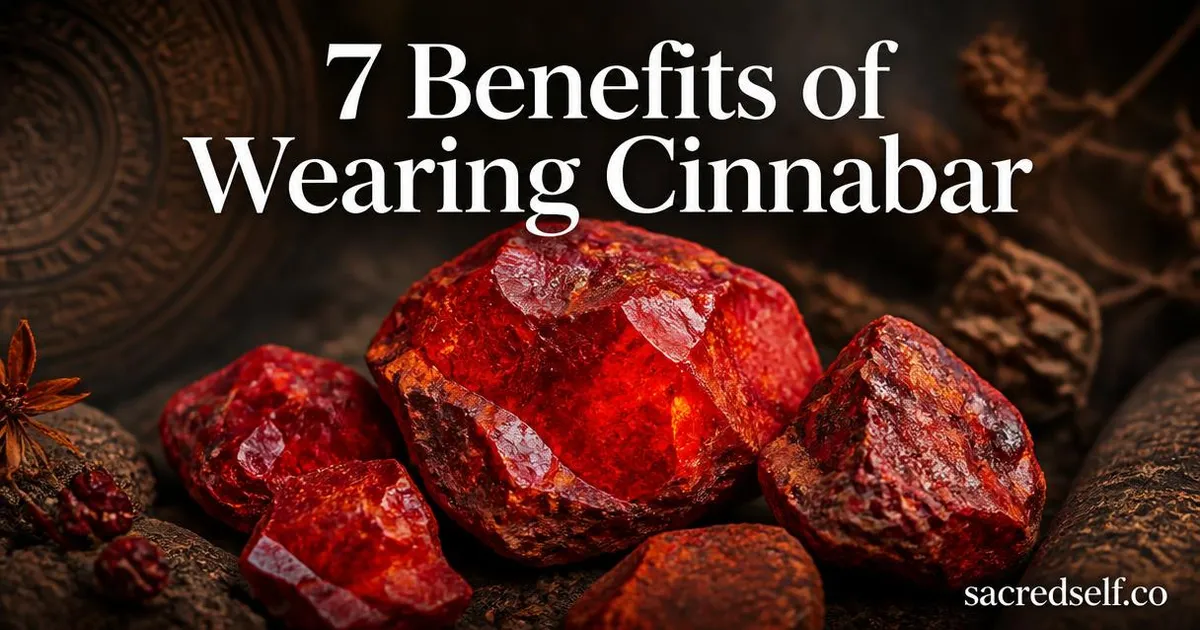
Cinnabar is mercury sulfide (HgS), the primary ore of mercury, with a distinctive bright red to brownish-red color. The saturation and depth of that red is what makes it recognizable.
It forms through hydrothermal processes, often found near volcanic areas and hot springs. The geological transformation – mercury meeting sulfur under heat and pressure – creates the vivid pigment.
Main sources include China (especially Hunan province), Spain, Peru, Mexico, and parts of the United States. China has the longest continuous history of cinnabar use.
Historically, cinnabar has been used in Chinese culture for thousands of years – in lacquerware, ink, traditional medicine, spiritual rituals, and as imperial seal paste. The red was reserved for important documents and sacred objects.
Note that “cinnabar” jewelry today may be natural stone, treated or stabilized stone, resin with cinnabar powder, or imitation (dyed materials). Knowing what you’re actually wearing matters for both safety and authenticity.
Cinnabar’s Spiritual and Metaphysical Properties
In metaphysical and spiritual communities, cinnabar is viewed as a stone of transformation and vitality. It represents change and transformation, both inner and outer.
It’s connected to the root and sacral chakras – grounding, security, creativity, passion. Wearing it is believed to activate these energy centers, supporting feelings of safety and creative expression.
In Chinese cosmology, cinnabar is associated with fire element and yang energy. It represents warmth, activity, expansion, and life force.
Cinnabar is linked to transformation, longevity, and spiritual immortality in Daoist alchemy. Practitioners used it (both literally and symbolically) in their pursuit of enlightenment and transcendence.
People use it in intention-setting, manifestation work, and as a tool for focus during meditation. The red serves as an anchor point for concentration.
These are symbolic and cultural associations, not scientifically measurable effects. Value comes from personal resonance and intentionality – what you bring to the stone, not what the stone does on its own.
🦋 If this resonated, you might also like: Remedies For Blocked Chakras
Is It Safe to Wear Cinnabar Jewelry?
Understanding the nuances helps you make an informed choice.
Understanding the Safety Concerns
The concern is straightforward: cinnabar contains mercury, which is toxic if ingested, inhaled as dust, or absorbed through skin in certain forms.
Context matters. Polished, sealed cinnabar in jewelry is very different from raw cinnabar powder or damaged, crumbling pieces. The mercury is bound in the mineral structure when the stone is intact.
The general consensus is that wearing intact, well-made cinnabar jewelry occasionally is considered low-risk by most sources, but not zero-risk. “Low-risk” doesn’t mean “no risk.”
Higher risk scenarios include: pregnant or nursing individuals, children, people with sensitivities, prolonged daily wear, damaged jewelry, or putting it in your mouth (which should be obvious, but needs saying).
How to Wear Cinnabar More Safely
Choose sealed, polished pieces from reputable sources – avoid porous, powdery, or flaking cinnabar. The surface should be smooth and completely intact.
Don’t wear it 24/7. Occasional wear reduces exposure and keeps the risk minimal.
Avoid wearing it while sleeping, exercising heavily (sweating), or in situations where it might break. Remove it during high-impact activities.
Wash hands after handling, and don’t touch your face or food while wearing it. This is basic hygiene for any stone that contains heavy metals.
Store it separately from other jewelry in a closed container. This prevents accidental damage and limits exposure.
Inspect regularly for chips, cracks, or deterioration. If damaged, stop wearing it immediately.
Some people choose resin-based “cinnabar” alternatives for the aesthetic without mercury content. This is a valid option if you want the look without the concern.
Who Should Avoid Cinnabar
Pregnant or breastfeeding individuals – mercury exposure of any kind is not recommended. The risk to a developing baby outweighs any symbolic benefit.
Young children, who are more vulnerable to heavy metal exposure. Their bodies process toxins differently.
People with mercury sensitivity, kidney issues, or compromised immune systems. If your body already struggles with detoxification, don’t add another variable.
Anyone uncomfortable with the idea. If wearing it makes you anxious, it’s not worth it regardless of the actual risk level. The stress negates any positive intention.
Cinnabar in Chinese Culture and Tradition
Cinnabar (朱砂, zhūshā) has been used in China for over 4,000 years. Its cultural significance runs deep.
In traditional Chinese medicine, it was used (historically and controversially) in certain formulations. Safety concerns have led to restrictions in modern practice, but it appears in classical texts and historical remedies.
In Daoist alchemy, cinnabar was central to internal and external alchemical practices aimed at longevity and spiritual transformation. Practitioners believed consuming refined cinnabar (a dangerous practice by modern standards) could lead to immortality. Symbolically, it represented the transformation of base matter into spiritual gold.
In art and craft, cinnabar was ground into vermilion pigment for painting, used in carved lacquerware, and as red ink paste for seals. The color was reserved for emperors, officials, and sacred texts.
Symbolically, cinnabar represents vitality, auspiciousness, protection from evil, and the life force. The red color itself is considered powerfully lucky in Chinese culture.
In ritual use, cinnabar was worn as talismans, placed in homes for protection, and used in spiritual ceremonies. It marked sacred space and sacred objects.
In the modern context, cinnabar is still valued culturally and spiritually, though awareness of safety has grown. People balance respect for tradition with contemporary health knowledge.
How to Choose and Care for Cinnabar Jewelry
Choosing and caring for cinnabar properly extends its life and keeps it safer to wear.
Choosing Authentic and Quality Pieces
Buy from reputable sellers who can verify the material and source. Ask questions about where the stone comes from and how it’s processed.
Look for well-polished, sealed surfaces – avoid anything that feels dusty or sheds color. Run your finger over it; it should be completely smooth.
Be aware that some “cinnabar” jewelry is resin-based or imitation, which may actually be safer. If you want the look without the mercury, this is a reasonable compromise.
If authenticity matters to you for cultural or spiritual reasons, ask for details and do research on the seller. Read reviews and check credentials.
Caring for Cinnabar
Don’t use harsh chemicals, ultrasonic cleaners, or steam cleaners. These can damage the seal and release particles.
Clean with a soft, slightly damp cloth – avoid scrubbing. You’re maintaining the surface, not stripping it.
Don’t soak in water or expose to extreme temperatures. Heat and moisture can compromise the integrity of the stone.
Store in a cool, dry place away from sunlight, which can fade the color over time. Cinnabar’s red is light-sensitive.
Handle carefully to avoid chips or cracks. Treat it carefully.
If you notice deterioration, stop wearing it and dispose of properly – not in regular trash. Check local hazardous waste guidelines for mercury-containing materials.
🦋 Our readers also explored: Spiritual Meaning Of Black Spiders In House
How to Wear Cinnabar: Practical Considerations
In feng shui and Chinese tradition, where you wear cinnabar has symbolic meaning.
Which Wrist to Wear a Cinnabar Bracelet
In Chinese tradition and feng shui, the left wrist is often considered the “receiving” side – worn to invite energy, abundance, and protection. This is the side for drawing things in.
The right wrist is seen as the “giving” or projecting side – worn to release negativity or project confidence outward. This is the active, expressive side.
Personal preference matters most. Wear it where it feels right to you and fits comfortably.
Some people alternate based on intention or intuition. Notice which wrist feels more natural on any given day.
Which Finger to Wear a Cinnabar Ring
Different fingers carry different symbolic associations in various traditions:
- Thumb: willpower, independence
- Index: confidence, leadership
- Middle: balance, responsibility
- Ring: love, creativity, commitment
- Pinky: communication, intuition
Chinese and metaphysical traditions may have specific recommendations, but personal meaning is most important. The symbolism is a guide, not a rule.
Consider comfort and practicality – some fingers are easier for daily wear. If a ring on your index finger gets in the way while you work, the symbolism won’t override the annoyance.
Using Cinnabar with Intention
If you’re considering wearing cinnabar, ask yourself: What am I hoping to invite or remember? Vitality, confidence, abundance, transformation, cultural connection?
Notice how you feel when you wear it – does it shift your mood, posture, or awareness? That’s valuable information about your relationship with symbols.
Pay attention to what’s happening in your life. Are opportunities appearing? Are you taking more risks? The stone itself isn’t causing that, but it might be focusing your attention in ways that lead to action.
Let the meaning evolve. What it represents today might be different in six months, and that’s natural. Symbols grow with you.
If you feel anxious about safety, honor that. You can explore the symbolism without wearing it, or choose an alternative material. The meaning doesn’t require the exact substance.
Practical steps to pair with wearing cinnabar:
- Set clear intentions in writing
- Take concrete actions toward your goals
- Create daily practices that support your desired state (vitality, confidence, etc.)
- Reflect regularly on what’s shifting and why
- Stay grounded in reality – don’t bypass necessary work or decisions because you’re wearing a stone
Frequently Asked Questions
Who should wear cinnabar?
People who feel drawn to its cultural significance, spiritual symbolism, or aesthetic, and who understand the safety considerations. It’s particularly meaningful for those with Chinese heritage or practicing feng shui, Daoist traditions, or crystal healing.
Avoid if you’re pregnant, nursing, have mercury sensitivity, or feel uncomfortable with any level of risk. If the idea of wearing it makes you anxious, that anxiety negates any benefit.
What are the spiritual benefits of cinnabar?
In metaphysical and traditional contexts, cinnabar is associated with vitality, confidence, spiritual transformation, manifestation, protection, and grounding. It’s connected to life force energy (qi), the root and sacral chakras, and abundance.
These are symbolic and cultural interpretations – benefits are subjective and based on personal belief and intention. What you bring to the stone determines what you get from it.
Is it safe to wear cinnabar jewelry?
Wearing polished, sealed cinnabar jewelry occasionally is generally considered low-risk, but not entirely risk-free due to its mercury content. Safety depends on the quality of the piece, frequency of wear, and individual factors.
Pregnant or nursing people, children, and those with sensitivities should avoid it. Always handle carefully, inspect for damage, and wash hands after touching.
What does cinnabar do to your body?
From a scientific standpoint, intact cinnabar jewelry has minimal direct physical effect when worn occasionally. The concern is mercury exposure if the stone is damaged, ingested, or worn constantly against skin.
Metaphysical perspectives attribute energetic effects like increased vitality and grounding, but these aren’t medically measurable. Any perceived benefits are likely psychological or symbolic rather than biochemical.
Which wrist to wear a cinnabar bracelet?
In feng shui and Chinese tradition, the left wrist is typically for receiving energy – wear cinnabar here to invite abundance, protection, and vitality. The right wrist is for projecting or releasing energy.
Personal comfort and intuition are more important than rigid rules. Some people alternate based on their intentions or simply wear it where it feels right.
How can I tell if cinnabar is real or fake?
Authentic cinnabar is heavy for its size, has a distinctive bright to dark red color, and may show slight color variations or natural patterns. It’s opaque and should have a smooth, polished surface.
Fake cinnabar might be dyed resin, plastic, or other materials – these are often too light, uniform in color, or warm to the touch quickly. Buy from reputable sellers and ask for verification.
Note that some “cinnabar” jewelry is intentionally resin-based for safety. This isn’t necessarily deceptive if the seller is transparent about it.
Is it okay to touch cinnabar?
Touching polished cinnabar briefly is generally considered safe – the mercury is bound in the mineral structure. The risk increases with prolonged contact, damaged or powdery surfaces, or if you touch your face or food afterward without washing hands.
Avoid handling raw cinnabar ore or dust. Always wash hands after touching cinnabar jewelry, and don’t let children handle it.
Which finger to wear a cinnabar ring?
Different fingers carry different symbolic meanings: thumb for willpower, index for confidence, middle for balance, ring for creativity or love, pinky for communication. In Chinese tradition, specific fingers may be recommended based on feng shui or metaphysical principles.
Wear it on whichever finger feels meaningful and comfortable to you – personal intention matters more than rules. Notice which placement feels most natural.
What are the benefits of wearing a cinnabar bracelet?
Cinnabar bracelets are worn for symbolic and spiritual benefits including attracting abundance, boosting confidence, enhancing vitality, grounding energy, and protection. In feng shui and Chinese culture, they’re considered auspicious and connected to life force.
The left wrist is traditional for receiving these energies. Benefits are subjective – they depend on your belief, intention, and what the bracelet represents to you personally.
Can I wear cinnabar every day?
While some people do wear cinnabar daily, occasional wear is generally considered safer to minimize any potential mercury exposure. If you choose to wear it daily, ensure the piece is high-quality, completely sealed, and undamaged.
Monitor for any skin irritation, inspect regularly for deterioration, and remove it during sleep, exercise, or activities where it might break. Listen to your body and comfort level.
What are the side effects of wearing cinnabar?
For intact, polished jewelry worn occasionally, most people experience no side effects. Potential concerns arise from prolonged exposure or damaged pieces: skin irritation (rare), mercury absorption if the stone is compromised, or anxiety about safety.
If you notice any reaction, remove the jewelry immediately. The psychological effect matters too – if wearing it makes you nervous, the stress outweighs any symbolic benefit.
Final Thoughts
Cinnabar has deep cultural significance and powerful symbolism – vitality, transformation, abundance, protection. Whether those benefits manifest for you depends on personal belief, intention, and how you integrate the symbolism into your life.
There’s no single right way to approach this. You can honor the tradition and meaning while also being informed about safety. You can appreciate cinnabar without wearing it, or choose alternatives that carry similar symbolism without the concerns.
What does this stone represent to you right now, in this moment of your life? What would it mean to invite more vitality, confidence, or transformation – and what practical steps support that beyond any object you wear?
If you wear cinnabar or have thoughts about its meaning in your life, share your experience in the comments – your perspective adds to the conversation.
Namaste. 🙏